







Introduction: The Pulse of Global Water Infrastructure
Industrial valves rarely attract headlines, but they determine the reliability, efficiency and safety of almost every water treatment process. As we move into 2027, the global water landscape is facing a “triple threat” of aging infrastructure, tightening environmental regulations, and energy price volatility.
Have you evaluated whether your current flow control systems are an asset or a liability? In modern Water Treatment and Wastewater Treatment, the difference between a high-performing plant and an operational nightmare often comes down to valve selection and automation. This guide moves beyond basic mechanics to explore how Smart Valves and Industrial IoT are redefining the pulse of our cities.
Industry Fundamentals: Defining Modern Flow Control
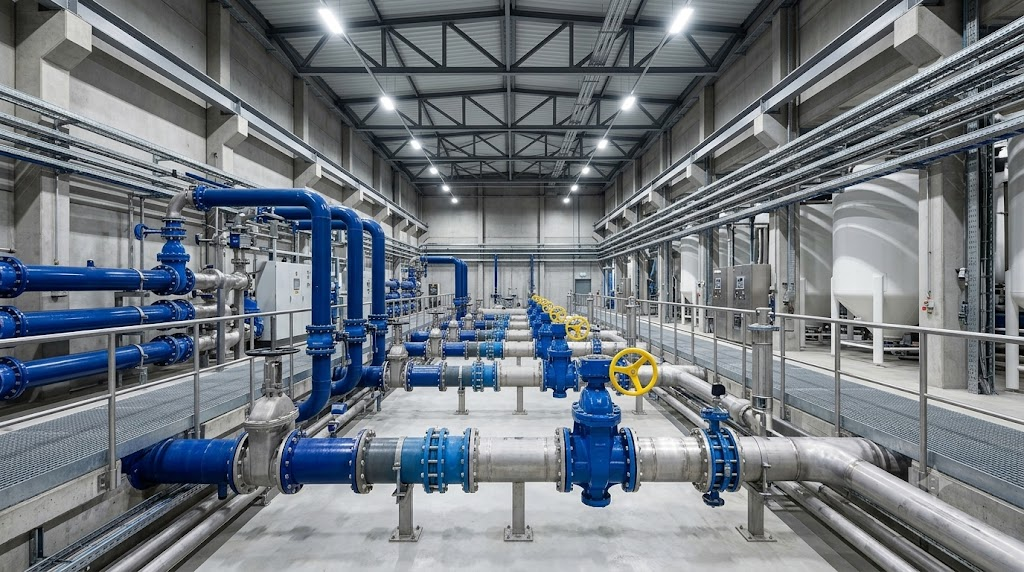
Industrial valves are critical mechanical devices used to regulate, stop, or direct the flow of liquids and gases within a system. In the water sector, they manage pressure and volume across treatment plants and distribution networks. These components ensure that Water Infrastructure remains safe, preventing backflow and controlling the precise movement of media through complex processing stages.
Industrial valves are important because they safeguard the integrity of the entire Smart Water Network. They protect expensive equipment like pumps from water hammer, enable isolated maintenance without shutting down entire systems, and ensure Wastewater Compliance. Without reliable valves, municipal and industrial facilities would face catastrophic pipe bursts, environmental leaks, and massive energy waste.
Smart valves improve wastewater treatment by integrating Electric Actuators and sensors that provide real-time data to SCADA systems. They enable autonomous flow adjustment based on demand, early Leak Detection, and Predictive Maintenance. By digitizing the physical flow, they reduce manual intervention, lower energy consumption, and prevent untreated discharge into local ecosystems.
The Engineering Core: Essential Valve Architectures
Selecting the right valve is not just about pipe diameter; it is about understanding the chemistry and hydraulics of the media.
Butterfly Valves: The Municipal Giant
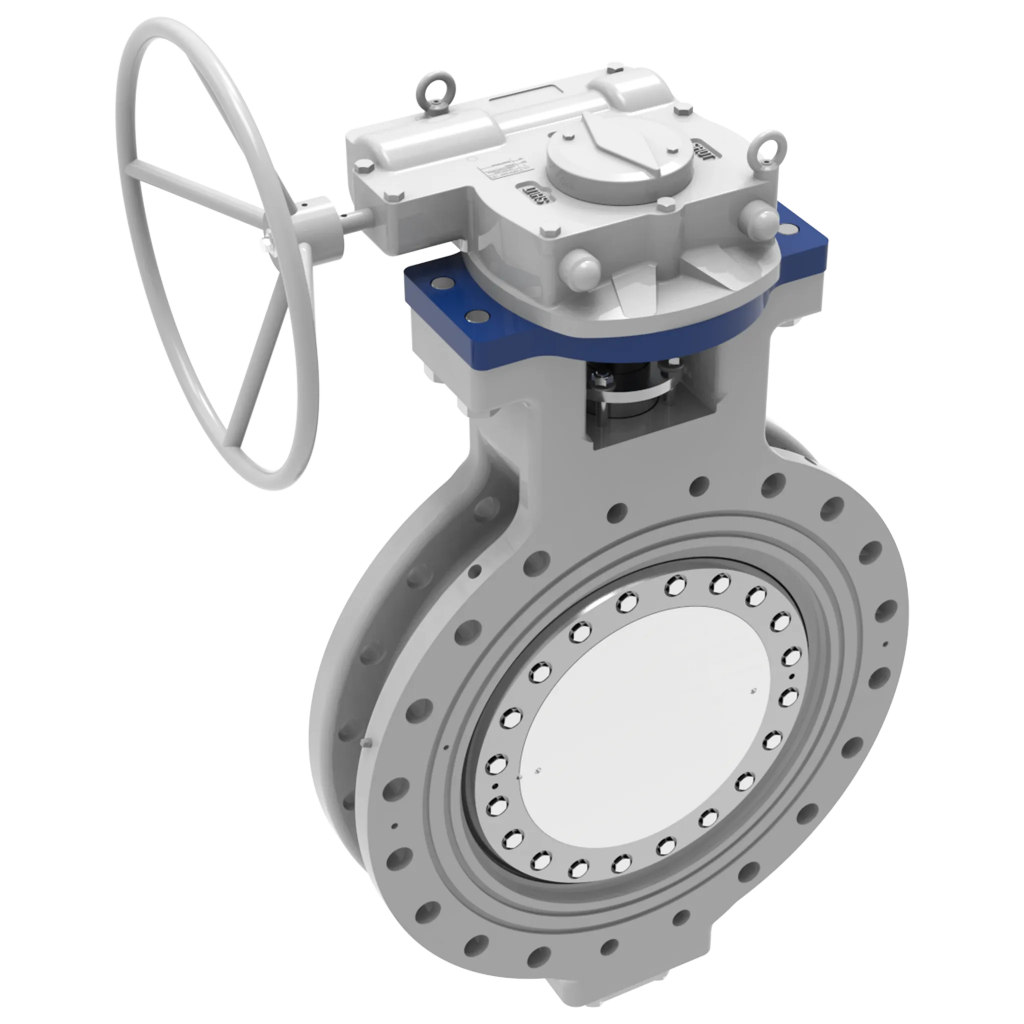
In large-scale Water Treatment, butterfly valves are the preferred choice for isolation and throttling. Their compact face-to-face dimensions and lower weight make them ideal for the massive pipelines found in desalination and municipal supply. High-performance triple-offset designs are increasingly replacing gate valves for high-pressure applications due to their superior sealing and durability.
Gate and Check Valves: The Guard Dogs
Resilient-seated gate valves remain the gold standard for drop-tight isolation in potable water systems. Meanwhile, check valves—specifically non-slam tilting disc models—are essential for protecting high-value pumps from the destructive power of reverse flow.
Knife Gate Valves: Mastering the Slurry
Wastewater Treatment involves abrasive solids and fibrous debris. Traditional valves often clog in these environments. The knife gate valve, with its sharpened stainless steel gate, is designed to “cut” through thick sludge, ensuring a clear path for effluent processing.
Digital Water: The Rise of Smart Valve Ecosystems
The reference article highlights the acquisition of Flotronic by Unibloc, signaling a shift toward integrated, specialized solutions. But the real story is Digitalization.
Valve Automation and Actuation
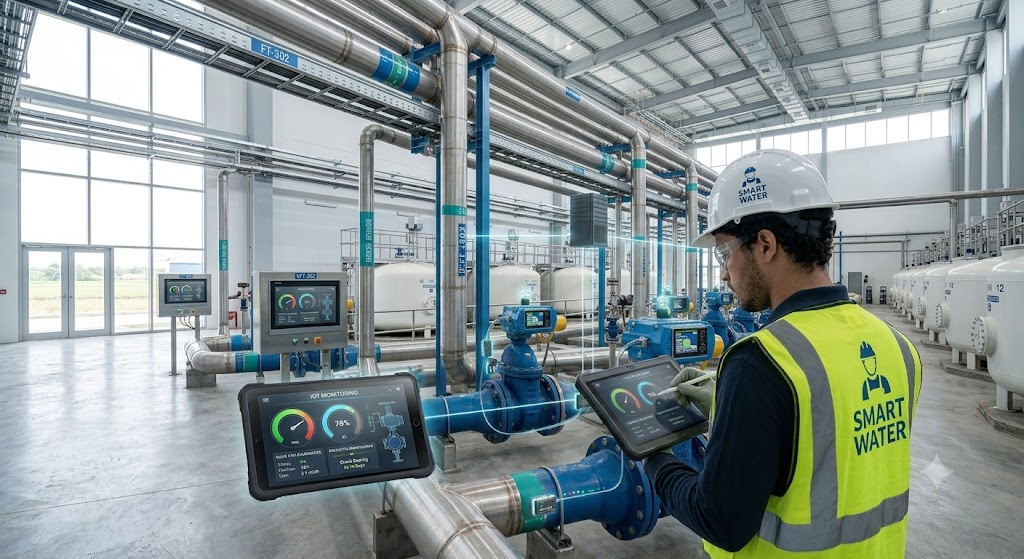
We are seeing a massive migration from manual handwheels to Valve Automation. An Electric Actuator is no longer just a motor; it is a data-gathering node. In 2026, these devices monitor torque profiles in real-time. For instance, if a valve requires 10% more torque than it did last month, the system alerts you to potential scaling or seat wear before a failure occurs.
Industrial IoT and SCADA Integration
Through Industrial IoT, valves are now part of a larger Smart Water Network. By connecting flow control data with SCADA (Supervisory Control and Data Acquisition), operators can visualize the “Digital Twin” of their entire plant. This level of transparency is vital for modern Asset Management.
Cybersecurity for Flow Control
As valves go online, they become targets. You must ensure your automation partners utilize encrypted communication protocols. A compromised valve in a municipal network could lead to unauthorized pressure surges or chemical dosing errors.
Energy Efficiency and Sustainable Water Management
The water industry accounts for roughly 4% of global electricity consumption. Valves play a silent but significant role in this footprint.
Minimizing Parasitic Pressure Loss
Every valve creates friction. Poorly selected valves lead to high pressure drops, forcing pumps to work harder and consume more power. By utilizing full-bore designs and optimized flow paths, you can significantly enhance the Energy Efficiency of your facility.
Precision Flow for Carbon Neutrality
Sustainable Water Management requires the elimination of waste. Automated Smart Valves allow for precise modulating control, ensuring that only the necessary amount of water is moved at the necessary pressure. This reduces the carbon intensity of every liter treated.
Strategic Sourcing: Navigating the Global Supply Chain
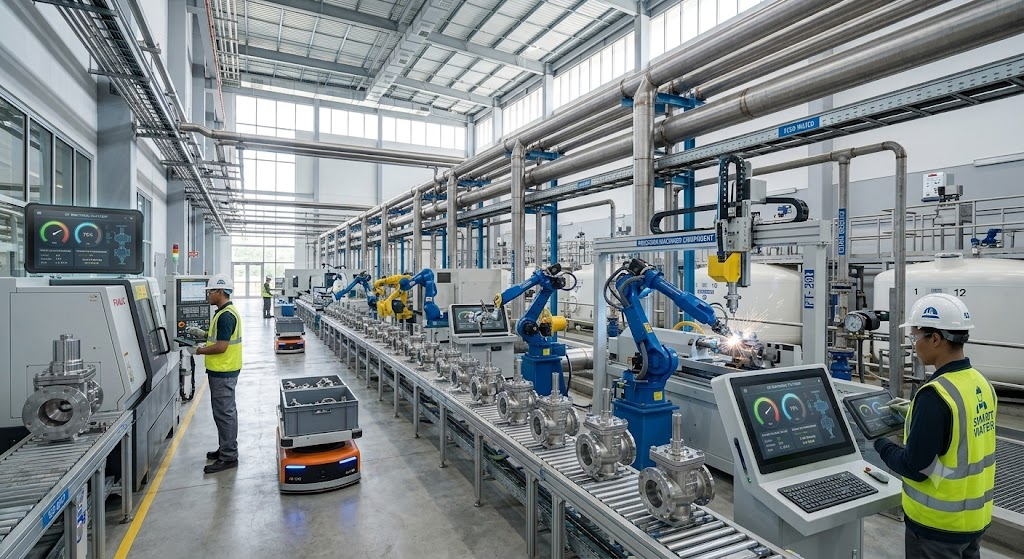
The global supply chain for Industrial Valves has undergone a tectonic shift. China manufacturing advantages have evolved from “low cost” to “high technology.”
The China Factor: R&D and Scale
Leading manufacturers in China, many of whom showcase at FLOWTECH CHINA, now rival European and American brands in technical sophistication. With massive investments in automated CNC machining and proprietary alloy development, the Global Supply Chain now relies on China for high-end OEM selection and rapid prototyping.
OEM Selection Criteria for 2026
When selecting a manufacturing partner, you should look beyond the price tag:
- Certification:Do they meet ISO, AWWA, and CE standards?
- Testing:Can they provide localized hydrostatic and seat-leakage test reports?
- Material Traceability:Can they verify the origin of their stainless steel or ductile iron?
Asset Management: From Reactive to Predictive Maintenance
The most expensive valve is the one that breaks unexpectedly. Predictive Maintenance is the antidote to unplanned downtime.
Acoustic Leak Detection
Modern valves can now be fitted with acoustic sensors that “listen” for the high-frequency hiss of a leak. This allows for Leak Detection at the micro-level, preventing a small weep from turning into a major burst that threatens Water Infrastructure.
AI-Driven Diagnostics
By applying AI algorithms to the data generated by Pneumatic Actuators and electric units, plants can implement a “Condition-Based” maintenance schedule. You no longer fix a valve because the calendar says it’s time; you fix it because the data says it’s wearing out.
The Total Cost of Ownership (TCO) Framework
Procurement managers often fall into the trap of focusing on the Purchase Price. In the Water and Wastewater Industry, the initial cost is often less than 20% of the TCO.
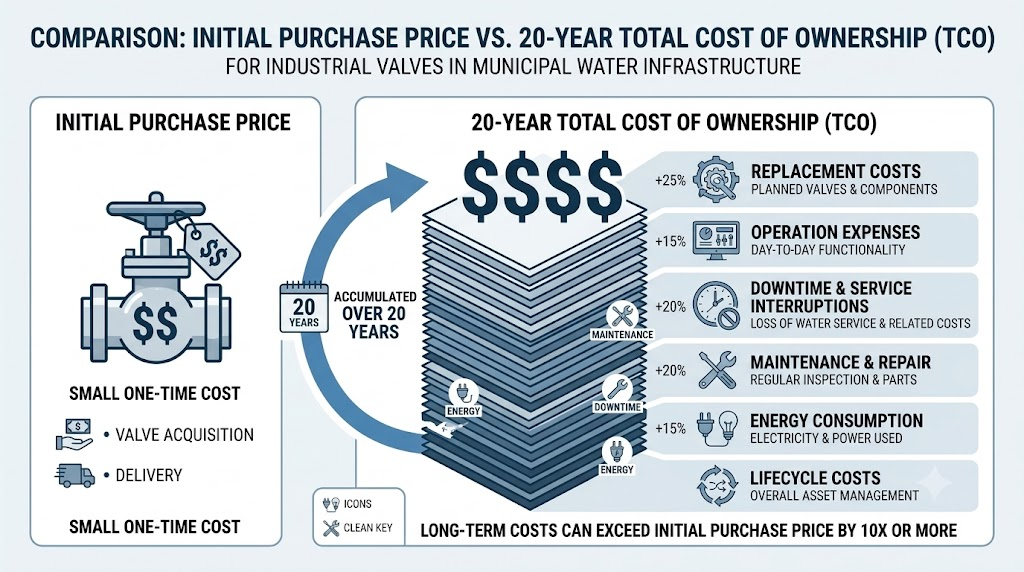
The TCO Equation for Valves:
- Purchase Price:The initial CAPEX.
- Installation Cost:Labor and downtime required for integration.
- Operational Cost:Energy consumed by actuators and pressure loss.
- Maintenance Cost:Spare parts, specialized labor, and lubrication.
- Downtime Cost:The catastrophic cost per hour when a process stops.
Prioritizing valves with longer mean-time-between-failure (MTBF) rates is the only way to achieve long-term fiscal health in Water Infrastructure projects.
The 2026 Future Outlook: ESG and Digital Twins
As we look toward the end of the decade, the industry is moving toward a “Self-Healing Network.”
- Digital Twins:Future plants will run a real-time virtual simulation alongside the physical plant. Valves will automatically adjust to simulated “what-if” scenarios, such as a sudden power outage or an influent surge.
- ESG Reporting:Sustainable Water Management is now a financial requirement. Automated valves provide the verifiable data needed for ESG (Environmental, Social, and Governance) audits, proving water conservation and energy savings.
- Energy Transition:Recovering energy from water pressure (using valves as micro-turbines) is an emerging trend that will turn treatment plants into “energy-neutral” or even “energy-positive” facilities.
- Internal Link:[Industrial Pump Selection]
FAQ: People Also Ask
Q: What is the most common cause of valve failure in wastewater?
A: Corrosion and debris buildup are the primary culprits. Wastewater often contains H2S gas, which creates an acidic environment that eats through standard iron. Using epoxy coatings or high-grade alloys is essential for longevity and Wastewater Compliance.
Q: Can I retrofit my existing manual valves with automation?
A: Yes, in most cases. Modern Electric Actuators are designed with modular mounting kits that can be adapted to existing gate or butterfly valves. This is a cost-effective way to transition toward a Smart Water Network without replacing entire assets.
Q: How does a valve contribute to “Digital Water”?
A: A valve becomes a “digital” asset when it can communicate its status (position, torque, cycles) to a central system. This data allows for remote operation and advanced analytics, which are the hallmarks of the Digital Water movement.
Q: What is the difference between a pneumatic and an electric actuator for water valves?
A: Pneumatic Actuators are fast and offer inherent fail-safe capabilities (using springs), making them ideal for high-cycle wastewater applications. Electric Actuators offer better precision, easier integration with Industrial IoT, and lower infrastructure costs since they don’t require compressed air lines.
As digitalization reshapes flow control strategies, industry professionals are increasingly seeking technologies that improve reliability, reduce lifecycle costs and support smarter water infrastructure. Industry platforms continue to provide valuable opportunities to explore emerging valve technologies, automation solutions and global manufacturing capabilities.
Learn more at FLOWTECH CHINA 2027.

