




Industrial Valves in Water and Wastewater: Selection, Automation and Smart Control
Water and wastewater systems are becoming more connected, automated and data-driven. But even as utilities and industrial plants invest in sensors, SCADA, AI analytics and digital twins, one piece of infrastructure still performs a very physical job: the valve.
Industrial valves in water and wastewater control, isolate, regulate and protect the flow of water, chemicals, sludge and other process media. Their reliability directly affects plant availability, hydraulic performance, maintenance requirements and operating costs.
For water utilities, EPC contractors, plant engineers and procurement teams, choosing the right valve is therefore about much more than diameter and pressure rating.
The real question is: will the valve continue to perform reliably under the actual operating conditions of the system, and can it be integrated into the plant’s automation and asset-management strategy?
This guide examines industrial valves in water and wastewater from both engineering and commercial perspectives, including valve types, materials, actuation, automation, smart monitoring, maintenance, standards, cybersecurity and lifecycle cost.
What Are Industrial Valves?
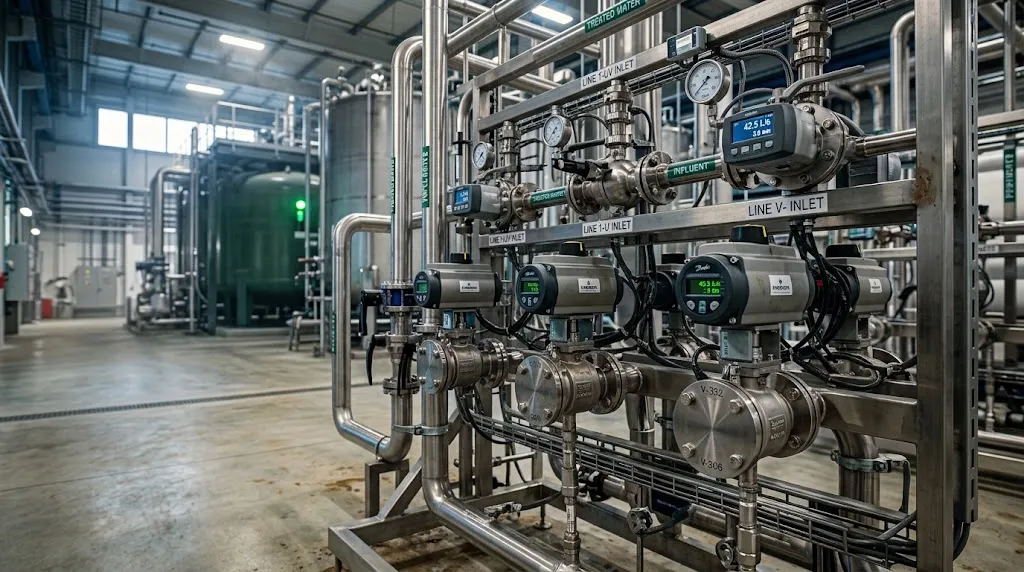
Industrial valves are mechanical devices used to start, stop, isolate, regulate, divert or control fluid flow within a piping system. In water and wastewater applications, they may handle potable water, raw water, treated water, wastewater, sludge, chemicals or corrosive process streams. Their selection depends on pressure, temperature, flow, media characteristics, frequency of operation and required control function.
For industrial valves in water and wastewater, the basic functions include:
- Isolation of equipment and pipeline sections
- Flow regulation
- Pressure control
- Backflow prevention
- Air release and vacuum protection
- Emergency shut-off
- Process automation
- Chemical dosing and treatment control
- Sludge and solids handling
The valve itself may be simple, but its role within the system can be critical.
A failed isolation valve can complicate maintenance. A poorly selected control valve can create excessive pressure loss or cavitation. A slow or incorrectly sized actuator can compromise an automated process.
That is why valve selection should begin with the process duty, not the product catalogue.
Why Are Industrial Valves Important in Water and Wastewater?
Industrial valves are important because they determine how reliably water and process fluids can be isolated, regulated and controlled throughout a treatment or distribution system. Properly selected valves help maintain hydraulic performance, protect equipment, simplify maintenance and support automated operation. In modern plants, intelligent valve systems can also provide operational data for asset management and predictive maintenance.
The importance of industrial valves in water and wastewater becomes particularly clear in large networks.
A typical treatment plant may contain hundreds or thousands of valves across:
- Intake systems
- Water treatment trains
- Filtration systems
- Membrane systems
- Chemical dosing
- Sludge treatment
- Pump stations
- Storage tanks
- Distribution networks
- Wastewater collection systems
A valve is rarely an isolated component. It forms part of a larger hydraulic, mechanical and control system.
Industrial Valves in Water and Wastewater: Which Types Are Used?
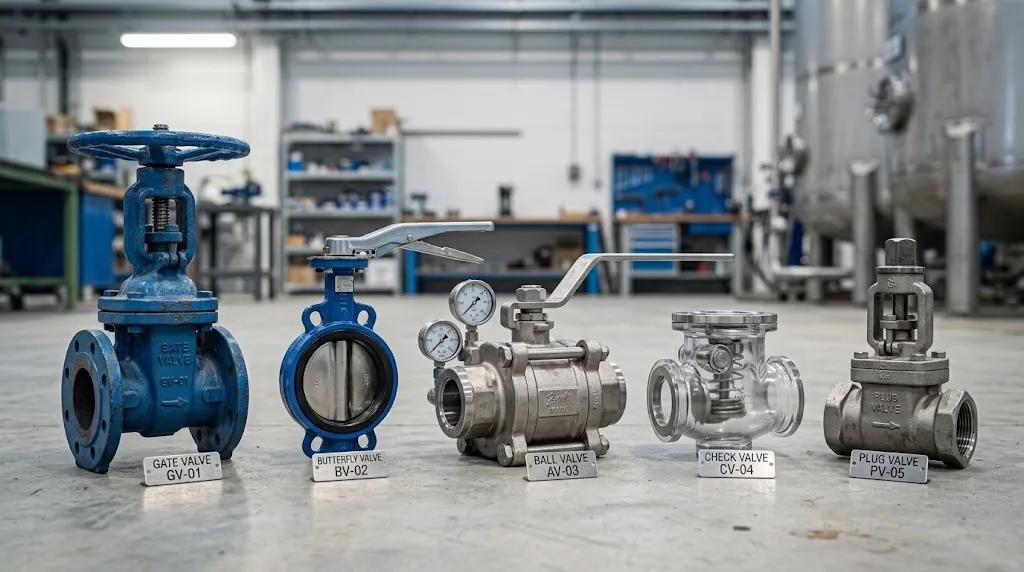
There is no universal “best” valve for water applications. The appropriate choice depends on the service duty.
1. Gate Valves
Gate valves are commonly used for on/off isolation in water distribution and treatment systems.
They provide relatively low pressure loss when fully open and are particularly useful where the valve normally remains either fully open or fully closed.
Typical applications include:
- Water transmission pipelines
- Distribution networks
- Treatment plant isolation
- Pump stations
- Storage facilities
Gate valves are generally not the first choice for continuous throttling.
2. Butterfly Valves
Butterfly valves use a rotating disc to control flow and are widely used where space, weight and cost are important considerations.
Common applications include:
- Large-diameter water pipelines
- Water treatment plants
- Pump stations
- Cooling-water systems
- Wastewater treatment
- Industrial process water
For large pipe diameters, butterfly valves can offer a compact alternative to other isolation valve designs.
3. Ball Valves
Ball valves use a rotating ball with a passage through its centre.
They are valued for:
- Fast shut-off
- Tight sealing
- Compact construction
- Relatively low flow resistance when fully open
They are frequently used in smaller-diameter piping, chemical dosing and utility services.
4. Check Valves
Check valves prevent reverse flow without requiring continuous operator intervention.
They are particularly important around:
- Pump discharge lines
- Water transmission systems
- Wastewater pumping stations
- Process equipment
- Chemical systems
The wrong check-valve design can contribute to pressure surges or water hammer, particularly in systems with rapidly changing flow conditions.
5. Plug Valves
Plug valves can be particularly useful in wastewater and sludge applications because their design can tolerate media containing suspended solids.
Applications may include:
- Raw wastewater
- Sludge
- Sewage
- Industrial wastewater
- Process isolation
Selection should consider solids concentration, abrasion, operating frequency and sealing requirements.
6. Control Valves
Control valves are designed to continuously regulate process conditions rather than simply isolate a pipeline.
Depending on the application, they can control:
- Flow
- Pressure
- Level
- Process conditions
In water and wastewater treatment, control valves may interact with sensors, PLCs and SCADA systems to automatically adjust process conditions.
7. Air Valves
Air-release and air/vacuum valves play an important role in pressurized water pipelines.
They can help manage:
- Entrained air
- Air accumulation
- Vacuum conditions
- Pipeline filling and draining
AWWA’s current standards catalogue includes C512-25 for air-release, air/vacuum and combination air valves for water and wastewater service, illustrating how specifically valve requirements are addressed within water infrastructure.
How to Select Industrial Valves for Water and Wastewater
Choosing industrial valves in water and wastewater should start with a structured review of the service conditions.
1. Identify the Media
What will pass through the valve?
It could be:
- Drinking water
- Raw water
- Seawater
- Wastewater
- Sludge
- Chemicals
- Reclaimed water
- Industrial process water
Media composition affects materials, sealing systems, corrosion resistance and valve design.
2. Determine Pressure and Temperature
At minimum, engineers should establish:
- Normal operating pressure
- Maximum pressure
- Minimum pressure
- Design pressure
- Temperature range
- Pressure transients
A valve that performs well at normal operating pressure may still be unsuitable for surge conditions.
3. Consider Flow and Valve Size
Valve size should not automatically match the nominal pipe diameter without checking the actual operating requirements.
For regulating applications, engineers should evaluate:
- Required flow range
- Pressure drop
- Valve authority
- Cavitation risk
- Minimum and maximum flow
- Frequency of operation
4. Evaluate Solids and Abrasion
Wastewater is fundamentally different from clean water.
Suspended solids, fibres, grit and sludge can affect:
- Seat wear
- Sealing performance
- Torque requirements
- Blockage risk
- Maintenance intervals
This is one reason why industrial valves in water and wastewater must be selected according to the actual process media rather than simply the pipe size.
5. Select the Correct Materials
Material selection should consider:
- Corrosion
- Chlorides
- Chemicals
- Temperature
- Abrasion
- Water chemistry
- Installation environment
For seawater or aggressive wastewater, corrosion resistance can become a major lifecycle-cost issue.
Valve Automation: Electric vs. Pneumatic Actuators
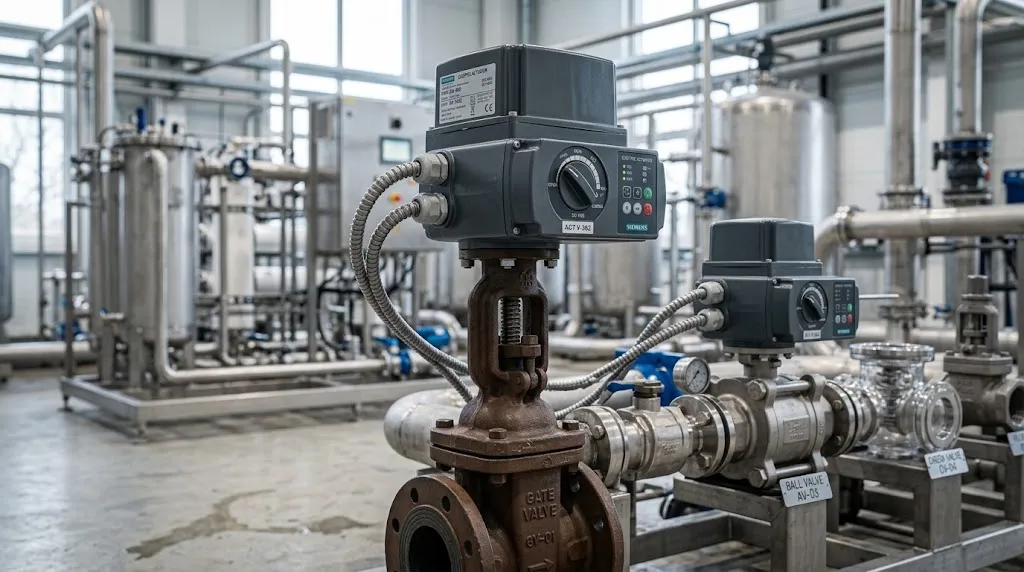
A modern water plant increasingly depends on automated valves. But automation does not mean every valve needs the same actuator.
Electric Actuators
An electric actuator converts electrical energy into mechanical movement to operate a valve.
Advantages can include:
- Precise positioning
- Easy integration with PLC and SCADA
- Good suitability for remote operation
- Useful feedback capabilities
- No compressed-air infrastructure required
Electric actuators are particularly attractive where valves are distributed throughout a large water network.
Pneumatic Actuators
A pneumatic actuator uses compressed air to move the valve.
Advantages can include:
- Fast response
- Simple mechanical design
- Suitable for frequent cycling
- Good performance in certain hazardous or demanding environments
However, pneumatic systems require reliable compressed-air infrastructure and introduce additional equipment and maintenance requirements.
How Should You Choose?
The decision between an electric actuator and a pneumatic actuator should consider:
Factor | Electric Actuator | Pneumatic Actuator |
Remote control | Excellent | Excellent |
Position control | Excellent | Good–Excellent |
Response speed | Moderate–Fast | Fast |
Infrastructure | Electrical | Compressed air |
Distributed networks | Strong fit | More infrastructure |
Frequent cycling | Application dependent | Strong fit |
Maintenance | Motor/electronics | Air supply + actuator |
The best option depends on the application rather than a blanket preference for one technology.
From Automated Valve to Smart Valve
Automation and intelligence are not the same thing.
An automated valve can receive an open/close command.
A smart valve can potentially provide information about its own operating condition and communicate that information to a wider control system.
Depending on the product architecture, smart valve functions may include:
- Position feedback
- Torque monitoring
- Cycle counting
- Temperature monitoring
- Operating-time analysis
- Fault alarms
- Condition monitoring
- Remote diagnostics
- Communication with control systems
This creates a major opportunity for industrial valves in water and wastewater.
Instead of waiting for a valve to fail, operators can use operational data to identify abnormal behaviour earlier.
How Do Smart Valves Improve Wastewater Treatment?
Smart valves improve wastewater treatment by connecting valve operation with sensors, automation and real-time control systems. Operators can monitor valve position, detect abnormal operating conditions and automatically adjust flow paths according to process data. Integrated with SCADA and analytics, smart valves can support faster fault detection, better process control and more proactive maintenance.
This becomes particularly valuable when wastewater facilities have many remotely operated assets.
EPA examples of intelligent water systems show how real-time controls can automatically operate pumps and valves using data from remote sensors, while SCADA provides the communication and control layer.
The result is a shift from:
Valve → Command
to:
Valve → Data → Decision → Action
Industrial IoT and the Connected Valve
The rise of Industrial IoT is changing how industrial valves in water and wastewater are managed. A connected valve may become one data point within a broader asset-management architecture.
A typical architecture can include:
Valve → Actuator → Sensor → PLC/RTU → SCADA → Cloud/Data Platform → Analytics
Each layer has a different role.
Field level
The valve and actuator perform the physical operation.
Control level
PLC or RTU receives measurements and executes control logic.
Supervisory level
SCADA provides monitoring, alarms and operator control.
Analytics level
Data platforms can analyse historical operating patterns and identify anomalies.
Management level
Asset managers can use the information to prioritise inspection, maintenance and replacement.
This architecture is increasingly relevant to Digital Water initiatives. The World Bank’s Digital Water programme specifically focuses on helping water and sanitation utilities integrate digital tools and improve operational performance.
AI and Predictive Maintenance for Industrial Valves
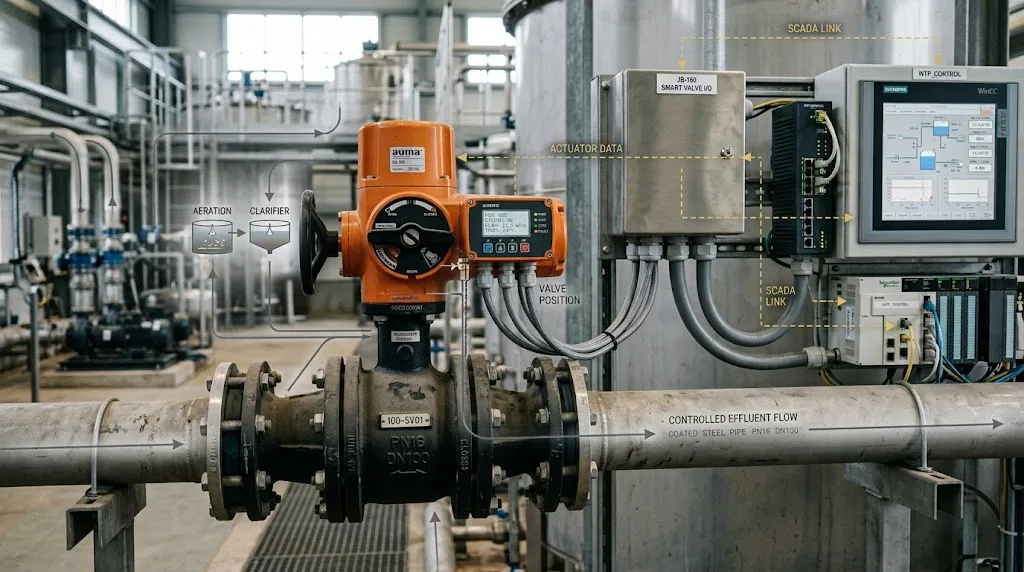
AI does not make a valve intelligent by itself. The value comes from combining good field data with appropriate analytics.
For example, a predictive maintenance system might monitor:
- Valve travel time
- Actuator torque
- Number of operating cycles
- Motor current
- Position error
- Temperature
- Pressure upstream and downstream
- Leakage behaviour
A model could then identify patterns associated with:
- Increasing friction
- Seat degradation
- Actuator problems
- Abnormal cycling
- Mechanical obstruction
- Potential leakage
This can support condition-based maintenance rather than purely calendar-based maintenance.
The distinction matters.
Replacing every valve component according to a fixed schedule may avoid some failures, but it can also result in unnecessary maintenance. Data-driven maintenance allows operators to focus resources where the evidence indicates higher risk.
Digital Twins and Water Infrastructure
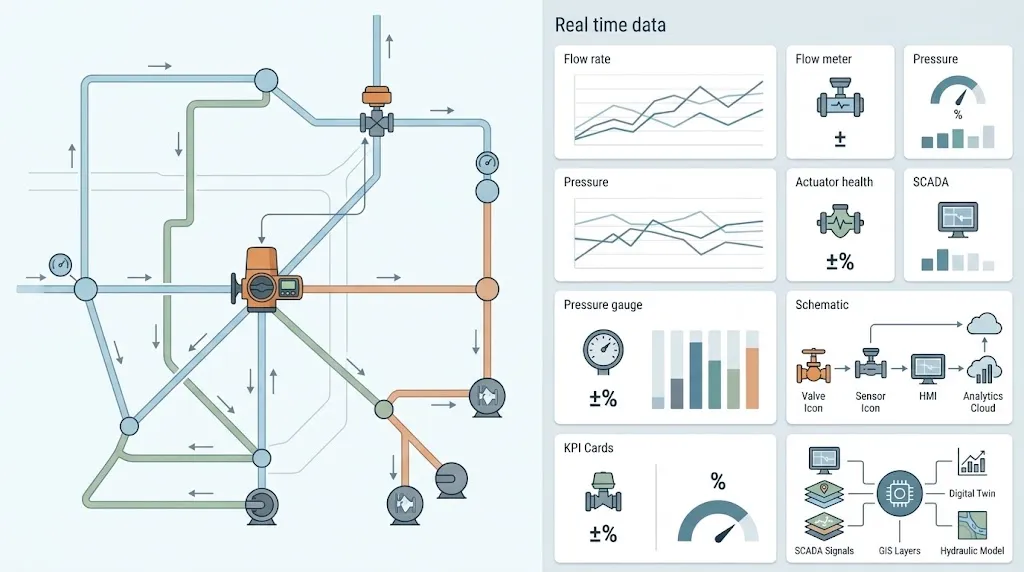
The next step is to connect valve data with a digital twin of the water or wastewater system.
A digital twin can combine:
- Hydraulic models
- GIS
- Asset information
- Sensor data
- SCADA data
- Maintenance records
- Operating history
For a valve network, this could allow engineers to understand how a change in one section affects the wider system.
Potential applications include:
- Scenario modelling
- Pressure management
- Network optimisation
- Failure response
- Energy optimisation
- Maintenance planning
- Capital investment planning
This is particularly relevant to large water utilities where thousands of physical assets are distributed across a network.
Energy Efficiency: Why Valve Selection Matters
Energy efficiency is often discussed in relation to pumps and motors, but valves can also influence hydraulic efficiency.
An incorrectly selected valve may create unnecessary pressure loss.
That additional loss can increase the work required from the pumping system.
EPA notes that drinking water and wastewater facilities can be among the largest energy consumers for municipalities, and energy can represent a significant share of water-system operating costs.
This is why valve selection should be considered together with pump selection.
Internal Link: Industrial Pump Selection
For example, engineers should assess:
- Valve pressure drop
- Required flow
- Pump operating point
- System curve
- Control strategy
- Frequency of throttling
- Variable-speed drive interaction
A valve and pump should be treated as part of the same hydraulic system.
Lifecycle Cost: Don’t Choose a Valve by Purchase Price Alone
The lowest purchase price is rarely the same as the lowest lifecycle cost.
For industrial valves in water and wastewater, total cost can include:
Purchase + Installation + Energy + Maintenance + Downtime + Replacement + Disposal
A cheaper valve may become expensive if it requires:
- Frequent maintenance
- More actuator replacements
- More site visits
- Higher pressure loss
- Earlier replacement
- More spare parts
For procurement teams, lifecycle cost analysis can therefore provide a better basis for comparing suppliers.
Ask suppliers for more than a quotation.
A serious technical comparison should include:
- Valve specification
- Material
- Pressure rating
- Leakage class
- Actuator specification
- Cycle life
- Testing documentation
- Certification
- Spare-parts availability
- Maintenance requirements
- Warranty
- Lead time
- After-sales service
Valve Standards and Testing
Standards provide an important technical foundation for valve selection.
ISO 5208:2015, for example, specifies pressure testing of metallic industrial valves, including examination of pressure-boundary integrity and closure tightness. ISO confirms that this edition remains current following its 2025 review.
ISO/TC 153 also covers industrial valve standards including valve actuation and pressure testing.
For waterworks applications, AWWA maintains dedicated standards covering different valve categories, including:
- Gate valves
- Check valves
- Air valves
- Butterfly valves
- Plug valves
- Backflow prevention assemblies
The correct standard depends on the application and project specification.
For EPC contractors, the specification should therefore define the applicable standards before supplier evaluation, rather than treating certification as an afterthought.
Cybersecurity: The Missing Part of Smart Valve Projects
A connected valve is also a connected industrial asset.
That means cybersecurity needs to be considered alongside mechanical reliability.
When valves become integrated with PLCs, RTUs, SCADA, remote-access systems or cloud platforms, the attack surface becomes broader.
The ISA/IEC 62443 family provides a widely used framework for securing industrial automation and control systems, including SCADA and other operational technology environments.
For water utilities and industrial plants, a smart valve strategy should therefore consider:
- Secure communications
- Authentication
- Access control
- Network segmentation
- Firmware management
- Remote-access controls
- Patch management
- Asset inventories
- Incident response
The question is no longer simply:
Can we control this valve remotely?
It should also be:
Who can control it, how is that access protected, and what happens if communication is lost?
Retrofitting Existing Industrial Valves
Not every water utility can replace its entire valve network. In fact, large-scale replacement may be economically unrealistic. A more practical approach can be retrofit digitalisation.
Depending on the valve and actuator, operators may be able to add:
- Position sensors
- Smart positioners
- Torque monitoring
- Wireless sensors
- Remote I/O
- Edge gateways
- Communication modules
This can turn existing assets into data sources without replacing every mechanical component.
For ageing water infrastructure, retrofit strategies can therefore offer a path toward digitalisation while spreading capital expenditure over time.
China Manufacturing and Global Valve Supply Chains
China has become an important manufacturing base for valves, actuators, pumps and water-treatment equipment.
For international buyers, the advantage is not simply manufacturing scale.
Chinese suppliers can offer a broad ecosystem covering:
- Casting
- Forging
- Machining
- Actuation
- Automation
- Electrical components
- Testing
- System integration
This can be particularly useful for EPC contractors and distributors looking for integrated sourcing. However, international procurement should not rely on price alone.
Before selecting a Chinese valve manufacturer, buyers should evaluate:
Manufacturing capability
Does the supplier manufacture critical components in-house?
Quality control
What testing procedures are used?
Standards and certification
Can the supplier meet the project-specific standards?
Traceability
Can material certificates and test records be provided?
Customisation
Can the supplier adapt the valve, actuator or control package to the application?
Export experience
Does the company have experience with international projects?
After-sales support
Are spare parts, technical support and service available in the target market?
For global projects, supplier reliability is part of the product specification.
How to Evaluate an Industrial Valve Supplier
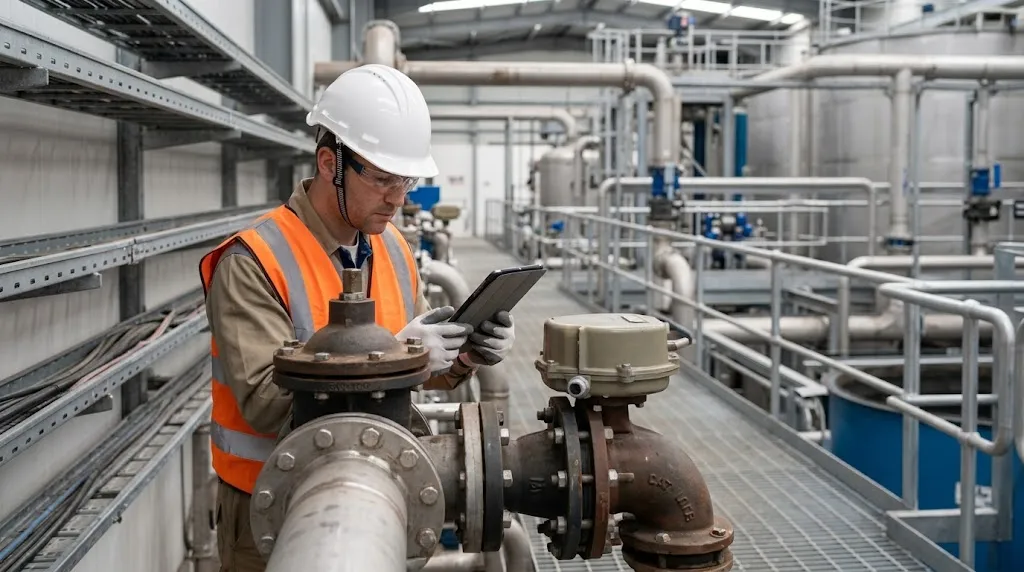
Before issuing a purchase order, ask these questions:
- What is the exact service medium?
- What are the minimum, normal and maximum operating pressures?
- What flow range is required?
- Is the valve for isolation or continuous regulation?
- What solids, chemicals or corrosive compounds are present?
- How frequently will the valve operate?
- Is manual, electric or pneumatic actuation required?
- Does the actuator need position feedback?
- Will the valve connect to PLC or SCADA?
- What communication protocols are required?
- What testing and certification documents are required?
- What is the expected service life?
- What spare parts will be stocked locally?
- What is the expected lead time?
- What is the total lifecycle cost?
This checklist is especially useful when comparing multiple manufacturers.
Common Valve Selection Mistakes
Even experienced teams can make costly mistakes.
Choosing by price
The cheapest valve may not be the cheapest asset to own.
Treating wastewater like clean water
Solids, fibres and corrosive compounds can fundamentally change valve requirements.
Ignoring actuator requirements
A suitable valve with an unsuitable actuator is still an unsuitable valve package.
Selecting oversized valves
Oversizing can compromise control performance and increase cost.
Ignoring hydraulic transients
Fast valve movement can contribute to pressure surges and water hammer.
Treating automation as an add-on
If the valve will ultimately connect to SCADA, automation requirements should be defined from the beginning.
Ignoring cybersecurity
Remote connectivity introduces operational technology risks that should be addressed during system design.
The Future of Industrial Valves in Water and Wastewater
The future of industrial valves in water and wastewater is not simply about adding sensors.
The larger shift is toward connected, measurable and optimised assets. Several trends are likely to shape the next generation of valve systems.
1. More intelligent actuators
Actuators will increasingly provide operating data rather than simply execute commands.
2. AI-assisted maintenance
Analytics will help identify abnormal valve behaviour before it becomes a process failure.
3. Digital twins
Valve data will increasingly become part of wider hydraulic and asset-management models.
4. Edge computing
Some decisions will move closer to the field, reducing dependence on central systems for time-sensitive control.
5. Cybersecure automation
As water infrastructure becomes more connected, OT security will become a core engineering requirement rather than an IT-only concern.
6. Lifecycle-based procurement
Utilities and industrial plants will increasingly compare suppliers using total cost of ownership rather than initial purchase price.
7. Smart water networks
Valve automation will become increasingly integrated with pressure management, leak detection, flow monitoring and real-time network optimisation.
ISO 24591-1:2024 reflects this broader shift by providing principles and guidelines for smart water management across drinking water, wastewater and stormwater systems.
Frequently Asked Questions
What are the most common industrial valves used in water treatment?
Common choices include gate valves, butterfly valves, check valves, ball valves, plug valves, control valves and air valves. The correct option depends on whether the valve is required for isolation, regulation, backflow prevention, air management or process control.
Which valve is best for wastewater?
There is no single best valve for wastewater. Engineers should consider solids concentration, abrasiveness, corrosiveness, flow characteristics, pressure, operating frequency and maintenance requirements before selecting the valve type and materials.
Are smart valves worth the additional cost?
Smart valves can be valuable when remote monitoring, predictive maintenance, process optimisation or asset management provides measurable operational benefits. The business case is strongest when valve failure or manual inspection carries significant downtime, labour or safety costs.
Should water utilities choose electric or pneumatic actuators?
It depends on the application. Electric actuators are often attractive for distributed and remotely controlled assets, while pneumatic actuators can provide fast response and reliable cycling where compressed-air infrastructure is already available.
Can existing valves be upgraded?
In many cases, yes. Depending on the valve and actuator design, position sensors, smart actuators, monitoring devices or communication modules can be added to existing equipment, allowing operators to introduce digital capabilities without replacing every mechanical asset.
Conclusion: The Valve Is Becoming a Data-Driven Asset
The evolution of industrial valves in water and wastewater follows a broader transformation in the water sector.
Valves are moving from passive mechanical components toward connected assets that can participate in automated control, condition monitoring and digital asset management.
But digital capability should never replace sound engineering.
The fundamentals still matter:
Correct valve type + correct materials + correct sizing + reliable actuation + appropriate testing + effective maintenance.
The next generation adds another layer:
Sensors + connectivity + SCADA + analytics + cybersecurity + lifecycle management.
For utilities, EPC contractors, distributors and industrial manufacturers, the opportunity is not simply to buy a “smart valve.” It is to build a valve strategy that improves reliability, operational efficiency and long-term asset value.
Discover the latest valve technologies and connect with leading manufacturers at FLOWTECH CHINA.