







Have you ever considered that the millions of gallons of effluent discharged daily by industrial plants are not actually “waste,” but an untapped resource waiting to be harvested? As global environmental regulations tighten and water scarcity becomes a pressing economic reality, industrial wastewater treatment is no longer just a compliance checklist—it is the cornerstone of sustainable manufacturing.
Welcome to the definitive guide on navigating the complexities of modern effluent management. Whether you are a facility manager battling high-salinity discharge or a procurement director looking to upgrade your plant’s infrastructure, understanding the evolution of this technology is critical. In this comprehensive breakdown, we will explore the core stages of wastewater processing, dive into cutting-edge innovations like Zero Liquid Discharge (ZLD), and reveal how the circular water economy is reshaping global industries. Furthermore, we will show you how to turn this knowledge into actionable sourcing strategies by directly engaging with the global manufacturing ecosystem. Let’s dive into the future of water.
Understanding the Wastewater Ecosystem in 2026
To master wastewater management solutions, we must first deconstruct what we are actually treating. The landscape of industrial effluent is vastly more complex today than it was a decade ago, driven by advanced manufacturing and stricter global compliance.
What Exactly is Industrial Wastewater?
Unlike municipal sewage, industrial wastewater is the byproduct of manufacturing and commercial processes. It varies wildly depending on the industry. A textile plant’s effluent is heavily laden with dyes and chemicals, while a semiconductor manufacturing facility produces wastewater containing heavy metals and highly specific acidic compounds. Treating this requires highly customizedwater purification equipment.
Key Contaminants and Effluent Challenges
Today’s plant engineers face a barrage of complex contaminants. The most common challenges include:
- Total Suspended Solids (TSS): Physical particles that cloud the water and damage equipment.
- Biochemical Oxygen Demand (BOD) & Chemical Oxygen Demand (COD): Organic matter that depletes oxygen in receiving water bodies.
- Heavy Metals & High Salinity: Toxic elements that require advanced separation technologies.
- Emerging Contaminants: PFAS (forever chemicals) and microplastics, which are becoming the primary focus of international regulatory bodies like the U.S. Environmental Protection Agency (EPA).
Overcoming these challenges requires a robust, multi-stage treatment approach.
The Core Stages of Modern Wastewater Treatment
A highly efficient industrial wastewater treatment plant operates like a well-oiled machine, breaking down the purification process into distinct, scientifically engineered stages.
Primary Treatment: The First Line of Defense
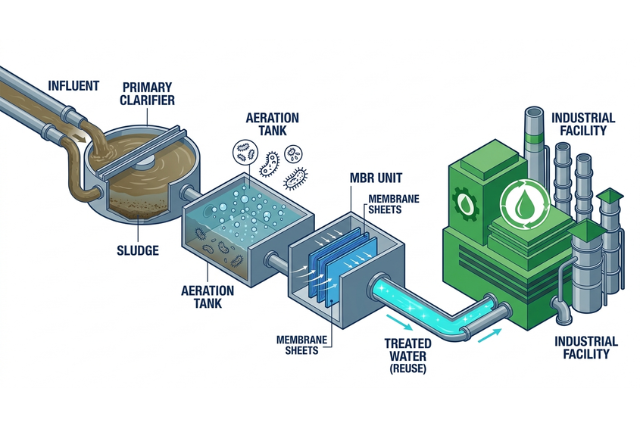
Primary treatment relies on physical and mechanical separation. As the effluent enters the facility, large screens and grit chambers remove debris, plastics, and heavy solids. Following this, the water flows into large sedimentation tanks (clarifiers). Here, gravity does the heavy lifting—heavier solids settle to the bottom as sludge, while lighter materials like oils and grease float to the top to be skimmed off. This stage removes roughly 50-60% of suspended solids, prepping the water for the delicate biological processes that follow.
Secondary Treatment: Harnessing Biological Processes
This is where biology meets engineering. Biological wastewater treatment utilizes naturally occurring microorganisms to consume the dissolved organic matter (BOD/COD) left behind.
- Aerobic Processes: Oxygen is pumped into aeration basins, encouraging bacteria to rapidly digest organic waste.
- Anaerobic Processes: Used for high-strength industrial waste, this process occurs without oxygen and has the added benefit of producing biogas—a renewable energy source.
The efficiency of secondary treatment heavily relies on the quality ofpumps & valves to maintain precise fluid handling and oxygenation levels.
Tertiary Treatment: Reaching Ultimate Purity
For industries requiring ultra-pure water for reuse, tertiary treatment is mandatory. This advanced stage removes lingering nutrients (like nitrogen and phosphorus), heavy metals, and complex chemicals. Techniques utilized here include chemical coagulation, UV disinfection, and advanced oxidation processes (AOP). The result is water so clean it often exceeds the quality of municipal drinking water, ready to be safely discharged or recycled back into the industrial loop.
Cutting-Edge Technologies Reshaping the Industry
The global push for sustainability is driving rapid technological advancements. Procurement managers attending industry summits are no longer looking for standard filters; they are hunting for disruptive sustainable water tech.
Membrane Bioreactors (MBR) and Filtration
The integration ofMembrane and Water Treatment technologies has revolutionized secondary and tertiary stages. Membrane Bioreactors (MBR) combine biological degradation with microfiltration or ultrafiltration.
Why OEMs are Shifting to Advanced Membranes
MBR systems eliminate the need for large secondary clarifiers, drastically reducing the physical footprint of a treatment plant while producing superior effluent quality. Global OEM/ODM manufacturers are now heavily investing in fouling-resistant membranes, which represent the current state-of-the-art in enhancing durability and operational efficiency in high-stakes treatment environments.
Zero Liquid Discharge (ZLD) Systems
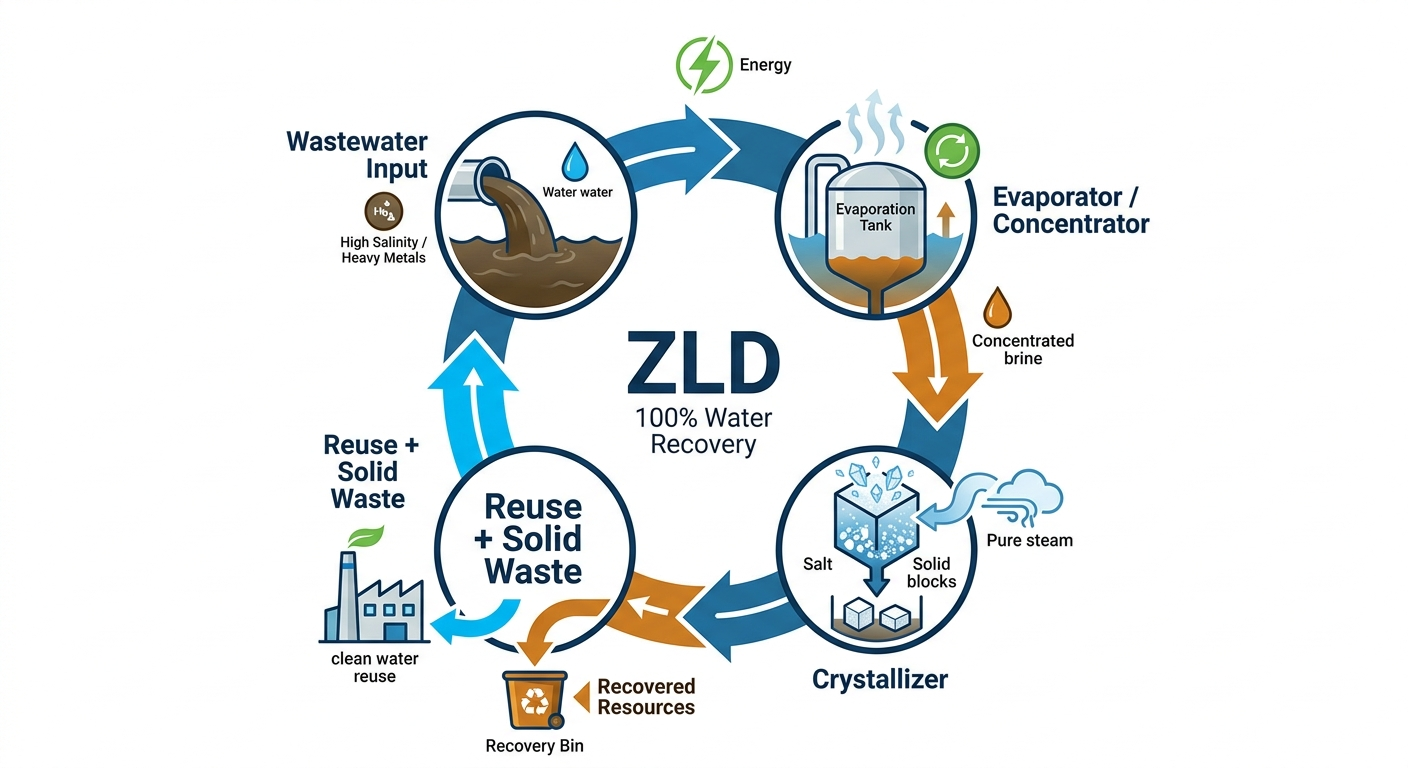
In regions facing severe water stress, Zero Liquid Discharge (ZLD) is the holy grail. ZLD is an engineering approach that aims to recover 100% of the water from wastewater, leaving behind only solid waste (often crystallized salts). By utilizing advanced reverse osmosis (RO) and thermal evaporators, facilities can achieve total water independence, insulating themselves from water scarcity and soaring municipal water costs.
Turning Waste into Wealth: The Circular Water Economy
We are transitioning from a linear “take-make-dispose” model to a circular water economy. Modern facilities view wastewater not as a liability, but as a source of revenue and resources.
Energy Recovery from Biogas
As mentioned during anaerobic treatment, the breakdown of organic matter produces methane-rich biogas. Forward-thinking plants capture this gas to power their own operations, significantly reducing their carbon footprint and operational costs. According to the International Water Association (IWA), energy recovery from wastewater is a critical step toward carbon-neutral water utilities.
Resource and Nutrient Harvesting
Sludge dewatering processes have evolved. Beyond just removing water to reduce disposal volume, technologies now allow us to extract valuable resources like phosphorus and nitrogen from the sludge, which can be sold as high-grade agricultural fertilizers. Furthermore, industries like electroplating can recover precious metals from their effluent, turning a hazardous waste problem into a lucrative secondary income stream.
Navigating Global Effluent Compliance and Standards
The regulatory landscape is unforgiving. Governments worldwide are imposing zero-tolerance policies for ecological damage.
Adapting to Stricter Environmental Regulations
To meet global compliance and regulatory standards, manufacturing plants must implement real-time Water Quality Monitoring systems. AI-driven sensors and IoT devices now provide instant alerts the moment effluent parameters deviate from legal limits. This proactive approach prevents devastating fines and protects corporate reputations. Upgrading to these smart monitoring systems is the primary reason why 100,000 industry professionals gather annually at major trade shows to source reliable instruments.
Sourcing & Connecting
Strategies for Sourcing Industrial Water Equipment
Understanding the technology is only half the battle; procuring the right equipment at the right price is what drives long-term business success.
Optimizing Your Procurement Strategy
If you are looking to upgrade your facility’s wastewater capabilities, navigating the global manufacturing landscape is your most critical step. For international buyers, the ability to engage directly with the global OEM/ODM strategic supply chain is invaluable. By moving past intermediaries and negotiating directly with manufacturers of membrane modules, heavy-duty pumps, and customized ZLD systems, companies can secure better pricing, technical support, and long-term reliability for their industrial infrastructure.
Maximizing ROI through Strategic Partnerships
The transition to high-performance wastewater infrastructure is not merely a purchase of hardware; it is a long-term investment in operational resilience and global competitiveness. To achieve true excellence in procurement, forward-thinking organizations should prioritize the following strategies:
- Strategic Matchmaking: Leverage digital platforms and industry networks to identify manufacturers that align with your specific technical requirements and ESG goals.
- Precision Negotiations: Utilize professional technical translation and local market expertise to ensure clear communication and alignment on quality standards with factory partners.
- Integrated Support Ecosystems: Seek out manufacturers who offer more than just products—look for partners who provide comprehensive technical documentation, ongoing maintenance support, and collaborative R&D capabilities.
By focusing on direct, value-driven partnerships with top-tier OEMs/ODMs, your organization can move beyond simple transactions and accelerate its industrial growth, ensuring both technical superiority and supply chain security.
References & Authoritative Sources:
1. United States Environmental Protection Agency (EPA): National Pollutant Discharge Elimination System (NPDES).
2. International Water Association (IWA): Digital Water and Circular Economy Insights.

