







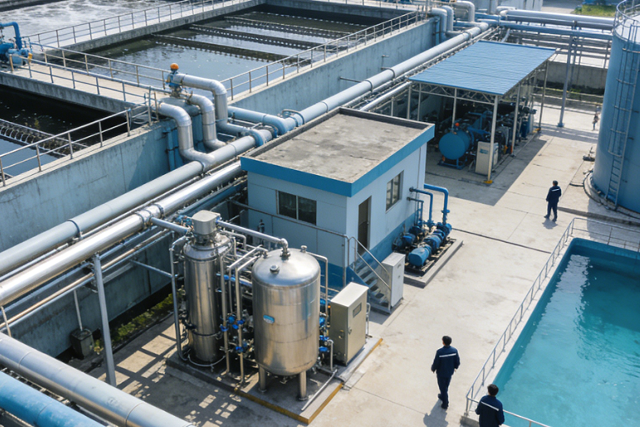
In the complex landscape of industrial refining, water is more than just a utility—it is the lifeblood of operational continuity. For two decades, the collaboration between industry leaders and specialized water management experts has served as a benchmark for what is possible when engineering excellence meets environmental stewardship. As global refining sectors face mounting pressure to reduce their freshwater footprint and strictly manage effluent discharge, this long-term partnership highlights how legacy facilities can be transformed into models of circular efficiency. This guide explores the evolution of this 20-year journey, detailing the technological milestones that have redefined industrial water recovery and set new standards for the global refining community.
Project Background & Core Challenges
Located in Oregon, Ohio, the Toledo Refinery processes 170,000 barrels of light, sweet North American crude daily, producing gasoline, ultra-low sulfur diesel, jet fuel, and high-value petrochemicals. Like all refining facilities, its operations generate large volumes of oily, solids-laden wastewater that requires rigorous treatment—either for safe discharge to the local publicly-owned treatment works (POTW) or for on-site reuse.
The refinery’s core challenges were threefold:
1. Water Quality Rigor: Cooling towers, a critical component of refining operations, demand high-purity “make-up water” to avoid equipment scaling and inefficiency.
2. Cost & Resource Optimization: Reducing reliance on municipal water supplies and minimizing POTW discharge fees to lower operational costs.
3. Operational Reliability: Ensuring wastewater treatment systems operate 24/7 to support uninterrupted refining at optimal capacity, without diverting internal resources from core business.
Veolia’s Integrated Solution: Service, Technology, and Long-Term Commitment
To address these challenges, Veolia delivered a holistic, end-to-end solution under a 20-year “finance-design-build-own-operate-maintain-manage” (FBTOOMM) contract—an innovative model that transfers operational risks and responsibilities to a water treatment specialist.
1. Collaborative Process Optimization
Veolia’s team first conducted an on-site assessment of the refinery’s existing water reclamation operations, working closely with the client to identify equipment gaps and align solutions with budget and timeline constraints. The partnership-focused approach ensured the final plan was tailored to the refinery’s unique operational needs, not a one-size-fits-all template.
2. Advanced Treatment Technology Pipeline
The wastewater treatment process leverages multi-stage purification to achieve both discharge compliance and reuse quality:
- Pretreatment: Wastewater is collected and screened to remove debris and large solids.
- Oil Removal: An API separator and dissolved nitrogen flotation (DNF) system eliminate free and emulsified oils.
- Secondary Treatment: Aeration processes break down residual organics and inorganics, followed by a two-train clarification system to further polish the water.
- Dual-Stream Distribution: Treated effluent splits into two paths—one meeting POTW discharge standards, the other directed to tertiary treatment via five sand filters for “polishing.”
- Reuse Integration: The polished water is recycled as cooling tower make-up water, meeting the refinery’s strict purity requirements.
Project Outcomes: Surpassing Goals Across Economic, Environmental, and Operational Dimensions
The 20-year partnership has delivered measurable value that extends beyond basic wastewater treatment, demonstrating the power of integrated water management.
1. Economic Savings & Risk Reduction
By reusing 50% of its wastewater, the refinery has significantly cut municipal water procurement costs and reduced POTW discharge fees. The FBTOOMM model also shifts maintenance and operational risks to Veolia, allowing the refinery to focus capital and human resources on its core refining business.
2. Environmental Sustainability
The solution reduces the refinery’s reliance on local freshwater supplies, alleviating pressure on regional water ecosystems—a critical achievement in an era of growing water scarcity. By minimizing pollutant discharge, the project also supports broader environmental stewardship goals.
3. Operational Excellence & Safety
A dedicated team of 15 Veolia professionals—including project managers, operators, maintenance mechanics, and administrative staff—operates the treatment plant 24/7. Veolia’s decades of experience in industrial water treatment enable agile adaptations to process changes (e.g., adjusting chemistry to match fluctuating wastewater composition) and ensure consistent performance.
Notably, the team’s safety record is exceptional: over 14 years of on-site operations, only one recordable incident (a minor sprain) has been reported, a testament to Veolia’s safety-first culture and rigorous training protocols.
The Secret to Long-Term Success: Partnership & Communication
Beyond technology and service, the collaboration’s durability stems from open, real-time communication between Veolia and Toledo Refinery teams. Regular formal meetings are complemented by day-to-day coordination, ensuring both parties are aligned on operational changes, water quality targets, and cost-control measures.
As Aaron Coulter, Toledo Refinery’s Area Manager, emphasizes: “The success of our relationship is a combination of people, experience and communication. We’re constantly exploring ways to expand water reuse, and Veolia’s expertise gives us the confidence to pursue higher treatment standards for broader applications.”
Veolia and the refinery are already exploring opportunities to increase the wastewater reuse rate further, demonstrating that sustainable water management is an ongoing journey, not a one-time project.
Setting the Standard for Future Refining
The 20-year success of this partnership demonstrates that industrial water reuse is not just an environmental imperative; it is a strategic business advantage. By continuously integrating advanced membrane technologies, real-time data analytics, and robust treatment processes, refineries have successfully turned an operational liability into a resilient, closed-loop system.
As we look toward the next decade, the lessons learned from these large-scale recovery projects will remain critical. They prove that with the right combination of technical expertise and long-term commitment, the refining industry can successfully decouple production growth from water consumption. This transformation is not only securing the future of individual refineries but is also contributing to a broader, global shift toward industrial water resilience.
Did you find this deep dive into industrial water recovery insightful? Share your thoughts on the most significant challenges facing your facility, and let’s keep the conversation on sustainable water management going.

