







Operating a modern coal-fired power utility or heavy industrial facility requires balancing reliable power generation with increasingly stringent environmental stewardship. As global water resources face rising pressure, industrial water management has shifted from a routine utility task to a core focus for corporate compliance and engineering teams.
One of the most complex challenges in this field is managing flue gas desulfurization (FGD) blowdown—the wastewater generated when scrubbers wash sulfur dioxide out of power plant flue gases. This water contains a complex mixture of dissolved salts, suspended solids, plant nutrients, and toxic heavy metals.
Cleaning these complex waste streams requires robust, reliable technologies. This guide explains how modern power plants manage heavy metals, the evolving global regulations driving these updates, and the treatment pathways that help plants maintain compliance.
I. The Global Regulatory Shift: The Road to Zero Liquid Discharge
Environmental regulations worldwide are establishing stricter limits on what industrial facilities can discharge into public waterways. While specific limits vary by region, the overall trend is clear: standard settling ponds are being replaced by high-performance treatment systems and, increasingly, Zero Liquid Discharge (ZLD) mandates.
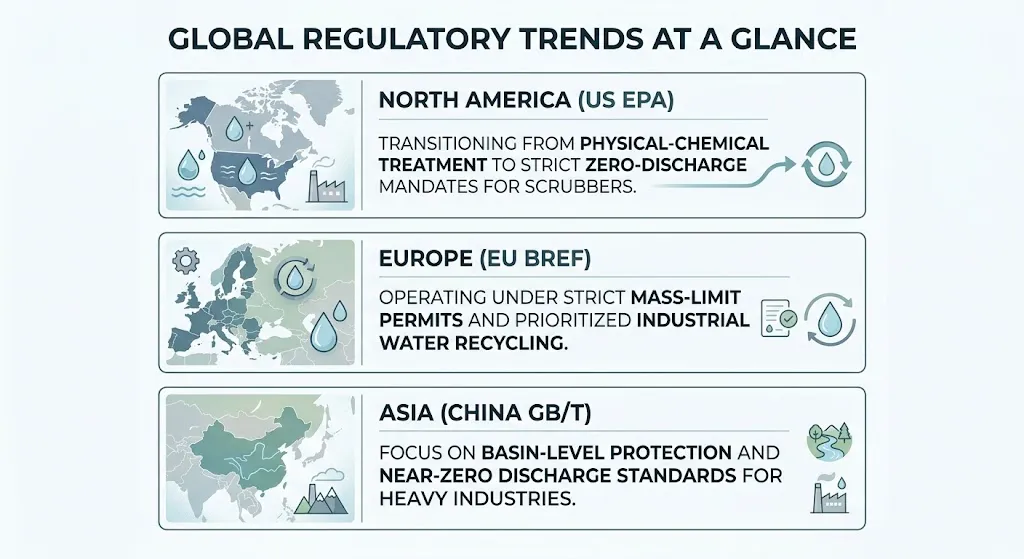
North American Standards and Timelines
In the United States, the Environmental Protection Agency (EPA) has steadily tightened its Effluent Limitation Guidelines (ELGs) for steam electric power plants. The regulations introduced in 2015 and updated in 2020 established strict limits for toxic pollutants like arsenic, mercury, and selenium.
In 2024, the EPA finalized a supplemental rule requiring plants to eliminate wastewater discharges from FGD systems, bottom ash transport water, and combustion residual leachate. Recognizing grid reliability concerns and supply-chain pressures, the compliance deadline for these zero-discharge limits was extended to December 31, 2034. While this extension gives utilities valuable engineering buffer time, the long-term goal remains clear: transition away from open-loop discharges.
European Union Priorities
Under the EU’s Industrial Emissions Directive, large combustion plants operate under strict permits based on Best Available Techniques (BAT) reference documents. Rather than focusing solely on absolute concentration limits, European guidelines prioritize overall resource conservation, encouraging plants to recycle treated water back into their operations to minimize freshwater consumption.
China‘s National Framework
In China, industrial water management is guided by national standards such as GB/T 40504-2021, which provides technical specifications for treating flue gas desulfurization wastewater. Along critical rivers like the Yangtze and Yellow River basins, local governments enforce strict watershed protections. These regional mandates drive many newly built or modernized facilities to adopt near-zero or zero-liquid-discharge systems to protect delicate freshwater ecosystems.
II. The Primary Heavy Metals of Concern
FGD wastewater is difficult to treat because it contains multiple types of pollutants, each with different chemical behaviors. Traditional treatment systems often struggle to remove all of them simultaneously.
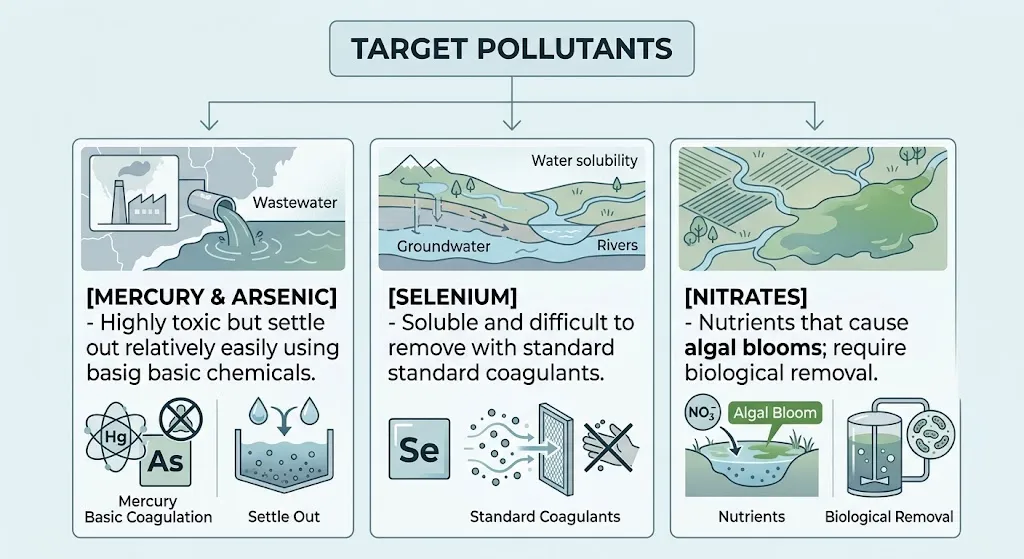
Mercury and Arsenic: The Traditional Targets
Mercury and arsenic are highly toxic elements that readily accumulate in aquatic food chains.
- Mercuryoften attaches to fine ash particles or dissolves as ionic compounds in wastewater.
- Arsenicexists in different forms depending on the oxygen level of the water.
While both are dangerous to the environment, they respond well to physical-chemical treatment. Adjusting the water chemistry can convert these dissolved metals into solid particles that settle out relatively easily.
Selenium: The Engineering Headache
Selenium is an essential nutrient in trace amounts, but it is toxic to fish and birds at higher concentrations. In scrubber wastewater, selenium usually exists as selenate, a highly stable, highly soluble compound that acts much like sulfate.
Because sulfate is present in scrubber water at very high concentrations, standard water treatment chemicals cannot selectively target and remove selenate. This makes selenium one of the most challenging pollutants to treat, requiring specialized biological reactors or high-efficiency membranes.
Nitrates: The Algal Bloom Drivers
Nitrates and nitrites enter wastewater from combustion gases and air pollution control systems. When discharged into rivers or lakes, these nutrients trigger eutrophication—rapid algae growth that suffocates fish by depleting oxygen in the water. Removing nitrates requires biological treatment to convert them into harmless gas.
III. The Practical Treatment Checklist
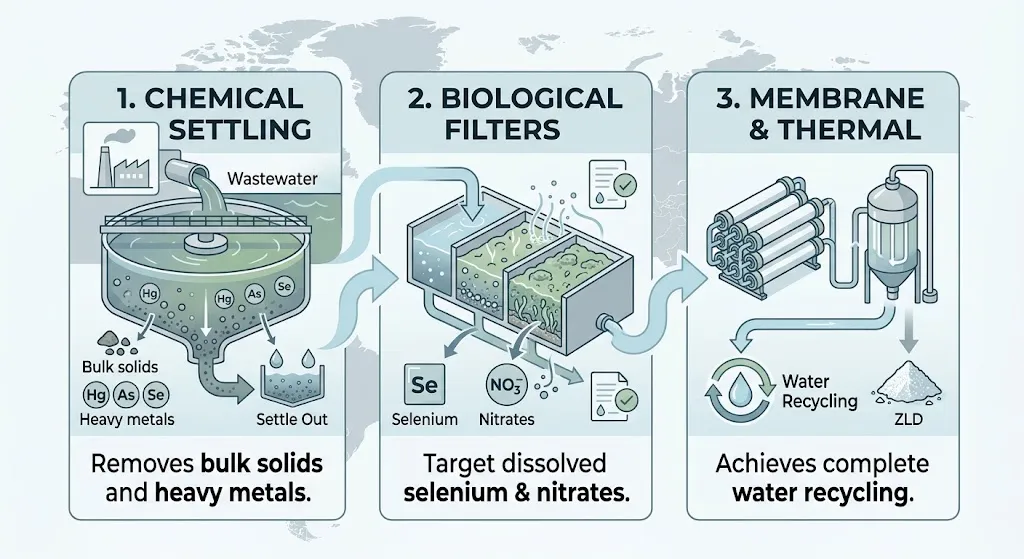
To meet modern discharge standards, facilities typically use a combination of three treatment steps: physical-chemical settling, biological filtration, and membrane-based recovery.
Step 1: Chemical Treatment and Settling
Physical-chemical treatment is the first step in cleaning wastewater. This process involves adding specific chemicals to the water to bind pollutants together so they can be filtered out:
- Oxidation: Chemicals like sodium hypochlorite are added to change the form of arsenic, making it easier to capture.
- pH Adjustment: Adding hydrated lime raises the pH of the acidic wastewater, causing dissolved metals like copper, nickel, and zinc to form solid particles.
- Organosulfides: Specialized organic sulfur compounds are added to bind with mercury, forming highly stable particles that can be filtered out even at very low levels.
- Coagulation and Flocculation: Coagulants (like iron salts) and polymer flocculants are introduced to bind these fine particles into larger clumps that settle quickly to the bottom of a clarifier tank, leaving clarified water behind.
Step 2: Biological Treatment
To remove dissolved selenium and nitrates, plants route the clarified wastewater through biological treatment tanks. These systems use natural, harmless bacteria that thrive in low-oxygen (anoxic) environments:
- How it works: The bacteria are fed a simple carbon source, such as organic nutrients or acetic acid.
- Removing Nitrates: The bacteria “breathe” the nitrates in the water, converting them into harmless nitrogen gas that vents safely into the air.
- Removing Selenium: The bacteria then target dissolved selenate and selenite, converting them into solid, elemental selenium. This solid selenium becomes trapped in the biological film inside the reactor, which is periodically washed and filtered out.
Step 3: Zero Liquid Discharge (ZLD)
For plants facing strict environmental limits or water shortages, ZLD systems offer a way to eliminate wastewater discharges entirely by recycling every drop of water. This process involves:
- Chemical Softening: Adding chemicals like soda ash to remove minerals like calcium and silica that can cause scaling and clog equipment.
- Membrane Concentration: Using high-pressure membranes (such as Disc Tube Reverse Osmosis) to push the softened water through fine filters, separating clean water from a highly concentrated salty brine.
- Evaporation and Crystallization: Feeding the concentrated brine into thermal evaporators that boil the water, leaving behind dry, solid salts for safe disposal in a landfill. The steam is condensed back into pure distilled water and returned to the plant’s boilers or cooling towers.
IV. Real-World Case Studies
The following examples demonstrate how industrial facilities apply these treatment steps to solve complex wastewater challenges.
Case Study A: Upgrading for Selenium and Nitrate Compliance
A large power utility in the United States needed to upgrade its treatment system to meet new regulatory limits for heavy metals and nutrients.
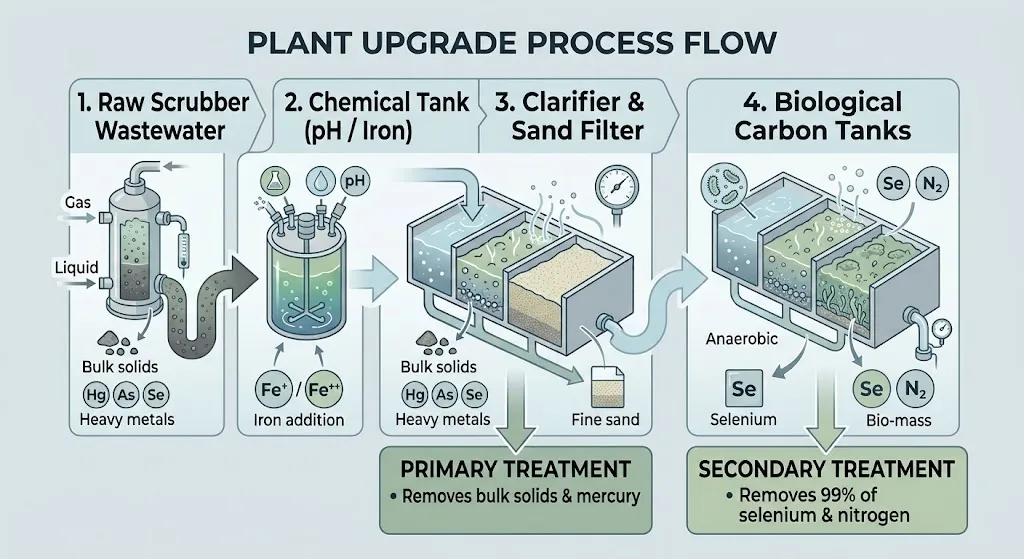
- The Challenge: The plant’s raw wastewater contained high levels of suspended solids, mercury, dissolved selenium, and nitrates.
- The Solution: The plant installed an integrated physical-chemical pre-treatment system followed by biological filtration. First, lime and iron salts were added to neutralize the water and settle out the bulk solids and mercury. The clarified water was then directed to biological filter tanks filled with granular carbon. By carefully dosing a liquid nutrient feed to support the bacteria, the plant created an active biofilm that consumed the nitrates and selenium.
- The Results:
- Suspended Solids: Reduced from over 10,000 mg/L to under 10 mg/L.
- Mercury: Dropped from 2,500 ng/L to less than 15 ng/L.
- Selenium: Reduced from 3.2 mg/L to 12 µg/L, comfortably meeting compliance standards.
Case Study B: Achieving Zero Liquid Discharge in a Water-Scarce Region
An industrial facility located in an arid region faced strict water conservation limits and was prohibited from discharging any wastewater into the environment.
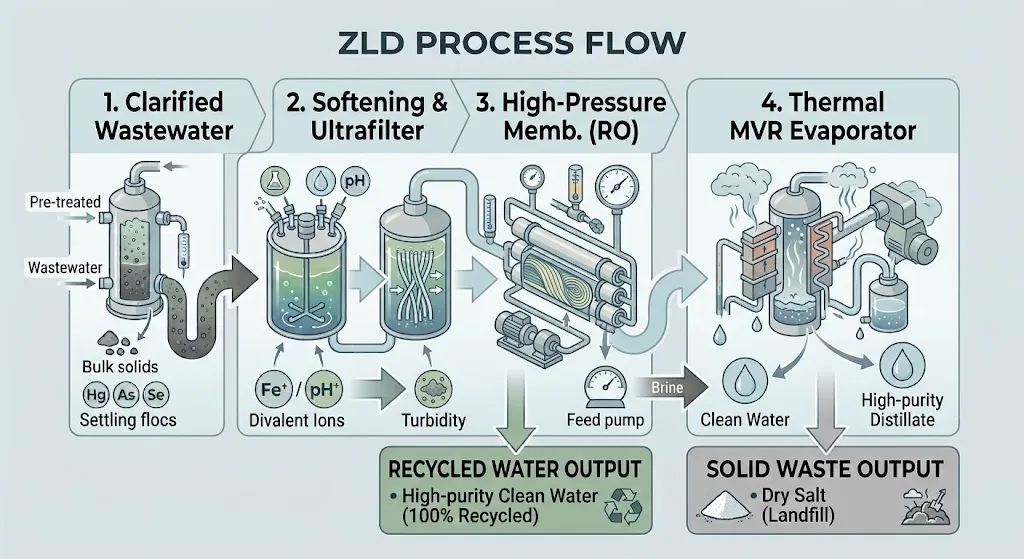
- The Challenge: The plant needed to treat and recycle highly saline wastewater containing high levels of hardness (calcium and magnesium) and silica, which easily clog standard filtration systems.
- The Solution: The plant implemented a robust Zero Liquid Discharge (ZLD) system. First, the water was treated with sodium hydroxide and soda ash to remove calcium and silica. After passing through ultrafiltration membranes to remove the resulting precipitates, the water was processed through specialized high-pressure reverse osmosis membranes to recover 75% of the water as clean permeate. The remaining concentrated salty brine was routed to a Mechanical Vapor Recompression (MVR) thermal evaporator and crystallizer.
- The Results:
- Water Recovery: Over 99% of the wastewater was recovered as high-quality distilled water and returned to the plant’s cooling towers.
- Waste Reduction: The system converted the remaining salt into dry crystals, which were safely hauled to a secure landfill, eliminating all liquid waste discharges.
V . See the Future of Water Treatment Live
Selecting, installing, and managing these advanced water treatment systems requires keeping pace with rapidly evolving technologies and changing environmental regulations. Whether your facility is evaluating chemical pre-treatment upgrades, biological reactors, or complete Zero Liquid Discharge systems, comparing options and discussing technical designs with experienced providers is key to finding the right solution.
WATERTECH CHINA provides a collaborative platform for environmental engineers, utility operators, industrial water managers, and technology providers to connect, share insights, and discuss practical solutions to these challenges.
The upcoming exhibition will host technology manufacturers, system integrators, and industry experts showcasing the latest developments in industrial filtration, membrane separation, and biological water treatment. Plan your visit to connect with peers, explore practical equipment demonstrations, and discover the systems shaping the future of global water management.

