




Introduction: The Dawn of the Intelligent Water Era
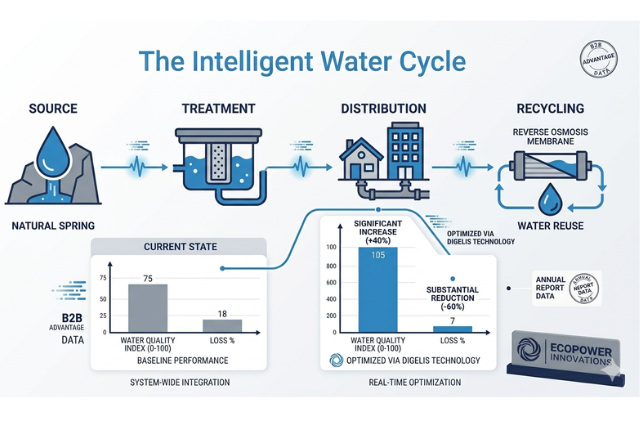
The global water sector is no longer defined solely by physical infrastructure; it is being redefined by bits, bytes, and neural networks. As we approach WATERTECH CHINA 2026, the industry stands at a critical juncture where water digitalization has shifted from an innovative luxury to an operational necessity. Driven by the need for resilience against climate change and the urge for higher operational efficiency, utilities and industrial plants are rapidly adopting Digital Water Solutions.
In this comprehensive guide, inspired by the latest breakthroughs from industry leaders like Xylem Vue, we explore the five core technologies shaping the path toward a data-driven future. From AI-driven water quality monitoring to digital twin pipe networks, these tools are the foundation of the intelligence revolution that will headline the 18th Shanghai International Water Show.
The Global Imperative for Water Digitalization
For decades, water management was a reactive “break-fix” industry. Today, that model is collapsing under the weight of aging infrastructure and increasing scarcity. The International Water Association (IWA) emphasizes that intelligent water management is the only viable path to achieve the UN’s Sustainable Development Goal 6.
The economic drain is also staggering. Non-revenue water (NRW)—water produced but lost through leaks or theft—costs the global economy billions annually. By integrating digital water solutions, organizations can transform these losses into revenue streams, ensuring long-term sustainability for both municipal and industrial water cycles.
Breaking the Silos of Traditional Infrastructure
Traditional water systems are often “insight-poor.” Data exists in isolated SCADA silos, making holistic management impossible. The goal of water digitalization is to create a unified data ecosystem. This integration is a primary focus for the 2500+ exhibitors expected at the NECC in Shanghai, where hardware and software converge to solve complex industrial effluent challenges.
1. AI-Driven Decision Intelligence: The Brain of Modern Utilities
Artificial Intelligence (AI) is the “intellectual core” of the modern water era. Unlike basic automation, AI in wastewater treatment and supply management doesn’t just execute commands; it recognizes patterns and self-optimizes.
Transitioning from Reactive to Proactive Operations
The real power of AI-driven decision intelligence lies in prescriptive analytics. By processing high-frequency data from IoT water sensors, AI can predict influent spikes or chemical dosing requirements hours in advance. This prevents biological upsets in wastewater plants and ensures that Water Quality Monitoring remains within strict regulatory limits.
Case Study: Machine Learning in Chemical Effluent Management
In large-scale chemical parks, such as those represented at our industrial solution hub, machine learning algorithms have reduced chemical consumption by up to 20%. By constantly analyzing water characteristics, the AI ensures that aeration and treatment intensity match the actual demand, significantly lowering energy costs—a prime example of digital water solutions delivering tangible ROI.
2. Digital Twin Technology: Mapping the Future of Networks
A digital twin for water infrastructure is more than just a 3D model; it is a dynamic, virtual replica of a physical system that lives and breathes in real-time.
Virtual Replicas for Real-time Stress Testing
By feeding real-time data into a hydraulic modeling engine, utilities can run “what-if” scenarios. What happens if a major 1200mm main breaks during peak hours? The digital twin identifies the exact valves to close to minimize service disruption. This technology is essential for modern water network construction and will be a major highlight of the 2026 Digital Water Innovation Summit.
3. Smart Leakage Detection and NRW Reduction
Hidden leaks are the “silent killers” of municipal budgets. Smart leakage detection utilizes acoustic sensors and transient pressure analysis to locate cracks before they become catastrophic bursts.
Plugging the Economic Drain of Non-Revenue Water
By implementing non-revenue water reduction solutions, cities are achieving unprecedented efficiency. In many Asian regions, where NRW levels can exceed 40%, the deployment of IoT water sensors allows for the creation of District Metered Areas (DMAs). These areas provide granular visibility, allowing repair crews to prioritize work based on the volume of water loss, ensuring maximum impact for every repair dollar spent.
4. IoT-Enabled Asset Performance Management (APM)
In the physical world of water, hardware is still king. However, IoT-enabled asset performance management gives these assets a voice.
Predictive Maintenance for Pumps and Valves
By monitoring vibration and temperature on the “mechanical heart” of the plant—Pumps & Valves—operators can shift from preventative to predictive maintenance. This extends the lifespan of the equipment and prevents unplanned downtime. At WATERTECH CHINA 2026, attendees can explore how 75000+ products are becoming “born digital,” pre-equipped with sensors that plug directly into the cloud.
5. Real-Time Water Quality Monitoring and Compliance
Regulatory standards like the WHO Drinking Water Guidelines are becoming stricter. Manual sampling is no longer sufficient for global compliance and regulatory standards.
Ensuring Safety Through High-Frequency Data
Real-time water quality monitoring provides a 24/7 safety net. Advanced sensors can now detect TOC, pH, and specific heavy metals in seconds. For industrial sectors like semiconductor manufacturing or pharmaceuticals, where ultra-pure water is critical, these digital water solutions provide the precision needed to protect sensitive equipment and end-products.
The Synergy Between Hardware Excellence and Digital Layers
At the 18th Shanghai International Water Show, the trend is clear: hardware and software are inseparable. It is no longer enough to have a high-efficiency RO membrane; you need a system that uses real-time data analytics to optimize the flux and cleaning cycles. This synergy allows for “Intelligence-Driven Management” that was previously unattainable for most medium-sized utilities.
Overcoming Cultural and Financial Barriers to Adoption
Despite the clear ROI, the path to water digitalization has hurdles. The World Bank notes that the primary barrier is often not technical, but institutional. Shifting to Digital Water Solutions requires a change in mindset—from viewing water as a commodity to viewing it as a data-rich resource. Fortunately, the falling cost of IoT water sensors is making this transition accessible to emerging markets.
Future-Forward Insights at WATERTECH CHINA 2026
To see these digital water solutions in action, WATERTECH CHINA 2026 is the world’s premier destination. The event offers:
- Massive Industry Platform: 190,000 sqm of space at the NECC.
- Strategic Matchmaking: Connect with the Top 100 Water Companies through our VIP program.
- The Global Exhibition: Professionals from 175 countries sharing Future-Forward Insights.
Core Takeaways: A Quick Summary
Digitalization is essential for meeting modern environmental and economic challenges.
- AI and Machine Learning are transforming reactive plants into self-optimizing “Smart Utilities.”
- Digital Twins provide a risk-free environment for testing infrastructure changes and reducing NRW.
- IoT Sensors enable predictive maintenance, significantly extending the life of Pumps & Valves.
- Real-time Monitoring is the new gold standard for ensuring global regulatory compliance.
FAQ: Navigating Digital Water Solutions
Q1: How can small utilities afford Digital Water Solutions?
A: Many smart water technology trends 2026 focus on “Software as a Service” (SaaS) models, allowing utilities to pay for insights rather than expensive upfront hardware.
Q2: What is the primary benefit of a Digital Twin?
A: It provides future-forward insights into network performance, allowing for pressure optimization and leak prevention without risking the physical system.
Q3: Can AI really improve water quality?
A: Yes. AI-driven water quality monitoring can predict pollution events before they reach the intake, allowing for automated shutdowns and safety protocols.
Q4: How do I find the right OEM/ODM partners for digital hardware?
A: The Global OEM/ODM Strategic High Ground at WATERTECH CHINA is the best place to connect with certified manufacturers.
Q5: Is pre-registration for the 2026 show mandatory?
A: Yes, to access our Exclusive VIP Benefit Package, including matchmaking and Halal catering, pre-registration is required.
Conclusion: Embracing the Digital Tide
The evolution toward Digital Water Solutions is a global movement that cannot be ignored. As we have explored, technologies like AI, Digital Twins, and IoT are not just concepts—they are practical tools that are already reducing waste, saving money, and protecting public health.
As the industry prepares to gather at WATERTECH CHINA 2026, we invite you to be a part of this transformation. Don’t just watch the future happen; actively shape it by exploring the world’s most comprehensive water marketplace in Shanghai.
Ready to lead the change?
Secure your pass today to unlock all international visitor benefits and guarantee your seat at the forefront of the digital revolution.
[👉 REGISTER NOW FOR WATERTECH CHINA 2026]
(Registration Link: Click here)
Did you find this guide helpful? Share it with your network on LinkedIn and tell us: Which digital trend is your priority for 2026?
