
The Technology of Equity: Engineering a Water-Resilient Future for All
Every year, World Water Day serves as a poignant reminder that while water covers 70% of our planet, safe and accessible water remains a luxury for billions.
The global water industry is currently navigating one of its most complex challenges to date: the pervasive presence of per- and polyfluoroalkyl substances (PFAS).
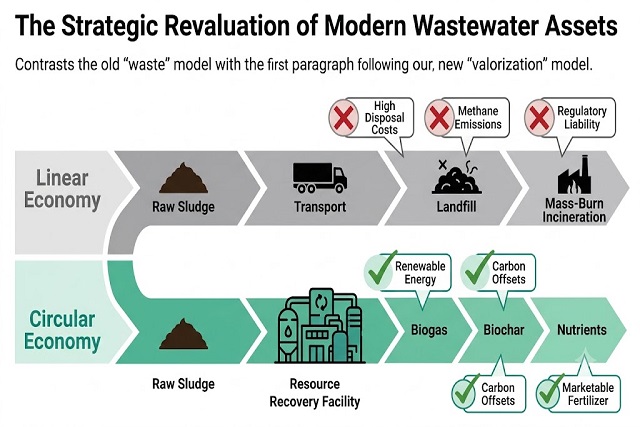
As global urbanization accelerates, the challenge of managing organic waste has reached a critical tipping point.
In the high-stakes arena of microelectronics, the difference between a market-leading processor and a wasted silicon wafer often comes down to a single molecule.
The global water sector is no longer defined solely by physical infrastructure; it is being redefined by bits, bytes, and neural networks.
Have you ever considered that the millions of gallons of effluent discharged daily by industrial plants are not actually “waste,” but an untapped resource waiting to be harvested?
Recently, SUEZ, a global leader in The Circular Economy for water and waste, reaffirmed its long-term commitment to China through a series of groundbreaking collaborative initiatives in Jiangsu and Shandong provinces.
China’s journey toward smart water management is not a voluntary upgrade but a necessary evolution driven by intense pressure.
The global refining industry faces a dual pressure: meeting rising energy demand while adhering to stringent environmental regulations and water scarcity constraints.
As the world’s largest producer of renewable energy, China has refined its Green Electricity Certificate (GEC) system to provide a transparent, market-based mechanism for tracking clean energy consumption.