







Introduction: The Dawn of Intelligent Biowaste Recovery
As global urbanization accelerates, the challenge of managing organic waste has reached a critical tipping point. Traditional disposal methods are becoming increasingly difficult to sustain as environmental regulations tighten and the demand for resource recovery grows. SUEZ’s Digelis FoodWaste technology offers a practical approach to this challenge by connecting waste management, water efficiency, and renewable energy production.
This Biowaste Treatment Technology is designed to optimize the preparation of organic waste for anaerobic digestion, enabling wastewater treatment plants (WWTPs) and industrial facilities to transform food waste from a disposal burden into a valuable feedstock for biogas production.
By improving the quality and consistency of organic feedstock, technologies such as Digelis FoodWaste demonstrate how wastewater treatment facilities can evolve from waste-processing sites into integrated resource recovery hubs.
The Global Imperative for Advanced Biowaste Treatment
Every year, roughly one-third of all food produced for human consumption is lost or wasted globally. Beyond the economic cost, organic waste that is improperly managed can contribute significantly to greenhouse gas emissions and place additional pressure on municipal waste infrastructure.
Traditional approaches such as landfilling and incineration are increasingly being complemented by recovery-based strategies. Modern cities and industrial facilities are looking for Biowaste Treatment Technologies that can integrate with existing infrastructure while recovering energy and reducing environmental impacts.
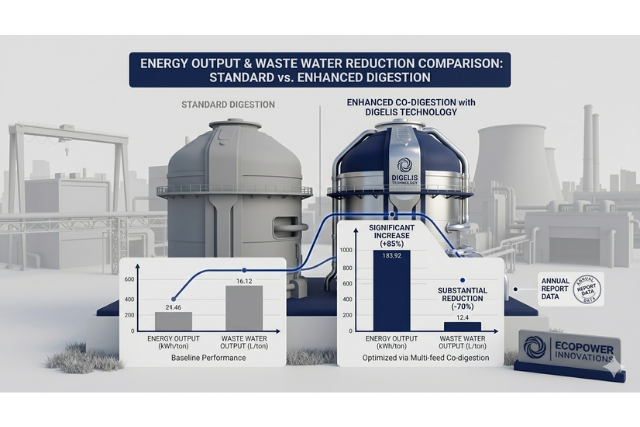
Digelis FoodWaste enables the co-digestion of food waste with sewage sludge, potentially increasing biogas production within existing anaerobic digestion infrastructure without requiring a complete overhaul of the treatment plant.
This approach reflects a broader shift from linear waste management toward a circular model in which organic waste becomes a resource rather than an end-of-life material.
Deep Dive into SUEZ Digelis FoodWaste Technology
The core of SUEZ‘s new offering lies in its ability to produce a high-quality “pulp” from heterogeneous biowaste. One of the primary hurdles in biowaste recycling is contamination—plastics, metals, and inert materials that can damage downstream equipment like Pump & Valves.
The Pre-treatment Process: Purity at Scale
Digelis FoodWaste utilizes a sophisticated mechanical separation process. By employing high-torque shredding and advanced screening, the system removes over 95% of contaminants. This ensures that the resulting organic slurry is optimized for the microbial communities within an anaerobic digester.
Optimizing the Organic Fraction
The technology excels at extracting the “organic fraction” from mixed waste streams. By stabilizing the pulp, SUEZ ensures a consistent feedstock for energy recovery. This consistency is vital for maintaining the health of the digester and maximizing the production of methane-rich biogas.
Integrating Water and Energy Efficiency
A standout feature of the Digelis FoodWaste system is its minimal water footprint. Traditional biowaste preparation often requires significant volumes of fresh water to create a transportable slurry. SUEZ has engineered this system to utilize recycled process water or even the moisture inherent in the waste itself.
This focus on water-energy nexus is a recurring theme for the Exhibition Highlights of 2026. By reducing water consumption, facilities lower their operational costs (OPEX) while increasing their energy self-sufficiency. In an era where energy prices are volatile, the ability to generate onsite power from biowaste is a massive competitive advantage for any Water and Wastewater Treatment facility.
The Role of Anaerobic Digestion in the Circular Economy
Anaerobic digestion (AD) has long been used in wastewater treatment, but it is often underutilized. Adding food waste to the mix—a process known as co-digestion—can boost biogas production by as much as 50% to 100%.
SUEZ‘s Digelis FoodWaste acts as the “enabler” for this process. Without high-quality pre-treatment, co-digestion often leads to “digester souring” or excessive grit buildup. This Biowaste Treatment Technology mitigates these risks, making circularity a reality for municipal utilities. By capturing methane that would otherwise escape from landfills, we are directly contributing to the International Water Association (IWA) goals for climate-neutral water cycles.
Technical Specifications: Engineering Excellence
For the engineers and technical experts among our 100,000 industry professionals, the performance data of Digelis FoodWaste is compelling.
- Throughput Capacity: Scalable modules ranging from 10 to 50 tons per day.
- Contaminant Removal: Proprietary grit and plastic removal systems ensure <1% impurities in final pulp.
- Energy Recovery: Potential to generate up to 150 kWh of electricity per ton of treated biowaste.
- Digital Integration: Fully compatible with Water Quality Monitoring systems and remote AI diagnostics.
The system is designed to be “plug-and-play” with existing Pipeline Systems, allowing for rapid deployment in urban environments where space is a premium.
Industrial Applications: Transforming Waste into Revenue
Beyond municipal use, the chemical and food-processing industries stand to benefit immensely from advanced Biowaste Treatment Technology. Large-scale food producers generate tons of organic by-products daily. Instead of incurring high disposal fees, these companies can now implement solutions like Digelis FoodWaste to fuel their own boiler systems or sell surplus energy back to the grid.
This transformation not only creates a new revenue stream but also fulfills critical ESG (Environmental, Social, and Governance) commitments. As the industry matures, forward-thinking industrial players are increasingly leveraging global strategic partnerships and OEM/ODM collaborations to build their own localized waste-to-energy ecosystems, turning operational liabilities into sustainable competitive advantages.
Environmental Impact and Carbon Neutrality Goals
The implementation of Digelis FoodWaste is a direct strike against carbon emissions. By diverting organic waste from landfills, SUEZ prevents the release of fugitive methane—a gas 25 times more potent than CO2. Furthermore, the biogas produced can replace fossil fuels in heating and transport.
According to SUEZ, a single installation can offset thousands of tons of carbon annually. This aligns perfectly with the “Green Transformation” vision that drives our Digital Water Innovation Summit. We believe that the convergence of Water and Wastewater Treatment with waste management is the only way to achieve true carbon neutrality in the urban sector.
Comparison with Traditional Biowaste Treatment Methods
Feature | Landfill | Incineration | Digelis FoodWaste |
Resource Recovery | Low (some methane capture) | Medium (Heat/Power) | High (Biogas + Compost) |
Water Efficiency | Poor | High Consumption | Optimized/Recycled |
Contaminant Handling | Not Required | High Cost | Integrated/Efficient |
Carbon Footprint | Very High | Medium | Net Negative |
As shown, the Biowaste Treatment Technology provided by SUEZ offers a superior ROI and environmental profile compared to legacy systems. This efficiency is exactly what international distributors look for in our Export Accelerator program.
Embracing the Digital and Green Tide
The launch of solutions like SUEZ Digelis FoodWaste is a testament to the power of innovation in solving the world’s most complex environmental issues. As we have explored, the integration of Biowaste Treatment Technology into the wider water management ecosystem is no longer a choice—it is a fundamental necessity for economic and ecological survival.
The industry is rapidly evolving toward a more circular and resilient model. By moving beyond traditional linear treatment processes and embracing intelligent, resource-recovering systems, we can collectively drive the change needed to secure a sustainable future. Don’t just watch the future of water management—actively shape it through innovation, adoption, and strategic adaptation.
Did you find this deep dive into biowaste technology helpful? Share this article on LinkedIn to help your network stay informed!
Question for you: Does your local municipality currently use co-digestion for energy recovery, or is it a key objective for the coming years? Let us know in the comments!

