


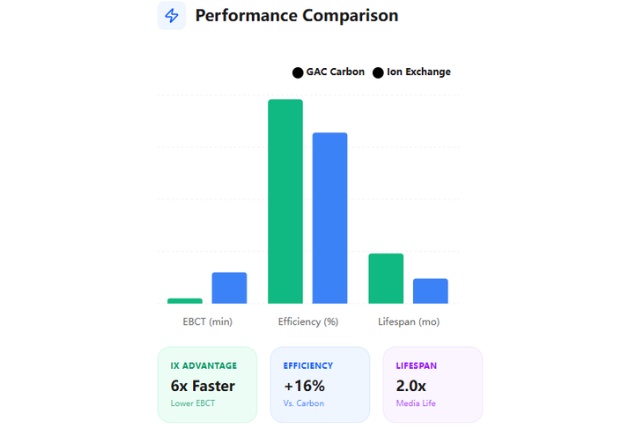
As global regulatory frameworks for per- and polyfluoroalkyl substances (PFAS) transition from monitoring to strict enforcement, water treatment professionals must adopt more sophisticated remediation strategies. While Granular Activated Carbon (GAC) has historically served as the industry standard, Ion Exchange (IX) technology is increasingly recognized as a superior solution for achieving the stringent Maximum Contaminant Levels (MCLs) now required for “forever chemicals.”
For industrial and municipal operators, the challenge lies in determining the precise conditions under which IX resins outperform traditional methods and how to integrate them into an existing treatment train.
1. The Technical Mechanism: Selective Adsorption
The efficacy of Ion Exchange in PFAS removal is driven by a dual-mechanism process. Unlike carbon-based media, which relies primarily on physical adsorption, IX resins utilize electrostatic attraction combined with hydrophobic adsorption.
Synthetic IX resins are engineered with positively charged functional groups that specifically target the anionic (negatively charged) head of the PFAS molecule. This targeted affinity allows for a significantly higher loading capacity and faster kinetics, often resulting in a smaller equipment footprint and longer media life compared to GAC.
2.When to Prioritize Ion Exchange
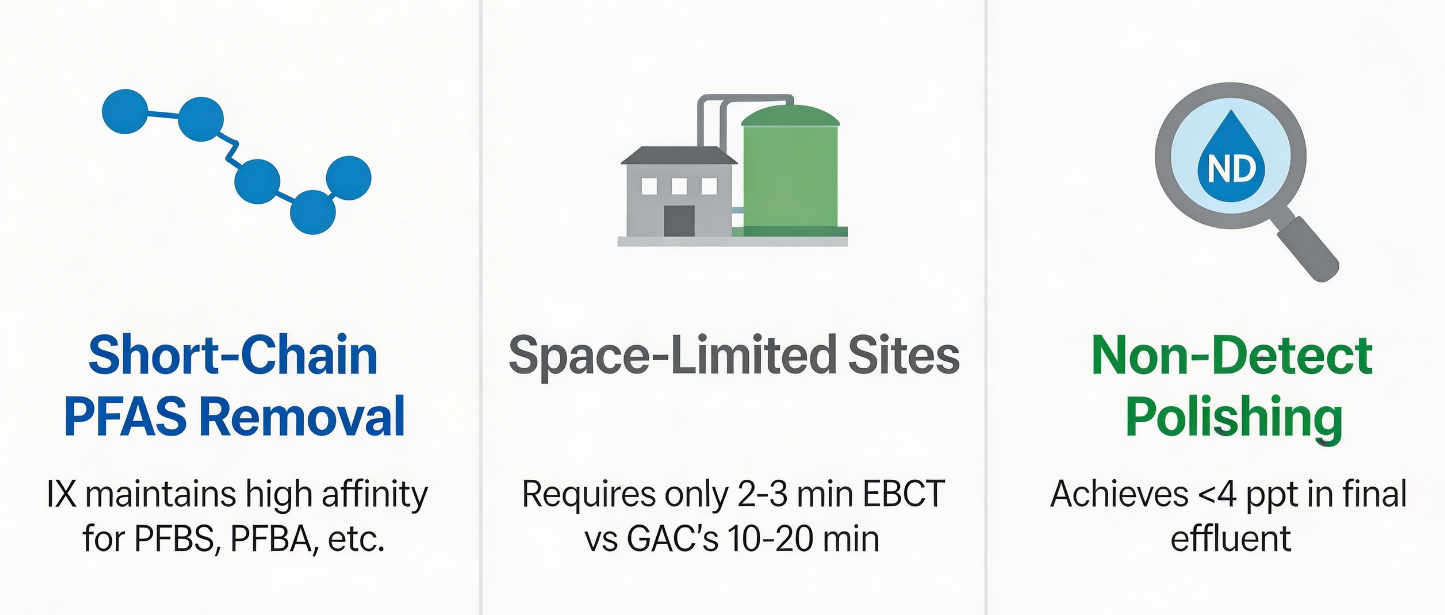
While IX is a highly effective technology, its implementation should be dictated by specific water chemistry and treatment goals:
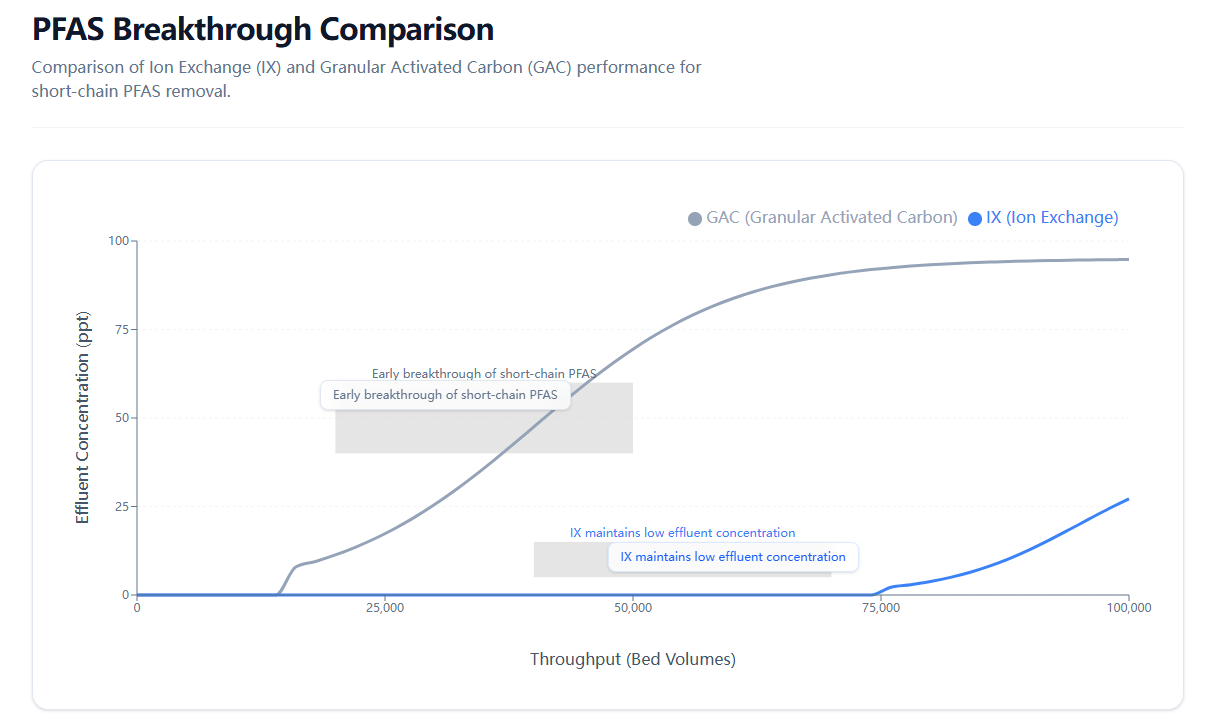
- Targeting Short-Chain Compounds: Traditional adsorption often sees early “breakthrough” of short-chain PFAS (such as PFBS or PFBA). Ion Exchange resins maintain a high affinity for these mobile compounds, ensuring consistent compliance across the full PFAS spectrum.
- Footprint Optimization: Because IX requires a significantly shorter Empty Bed Contact Time (EBCT)—typically 2 to 3 minutes compared to GAC’s 10 to 20 minutes—it is the ideal choice for facilities with limited spatial capacity.
- Polishing for Non-Detect Levels: In multi-stage systems, IX is frequently deployed as a final “polishing” stage. By placing IX after a primary treatment phase (such as Reverse Osmosis or GAC), operators can ensure the final effluent reaches non-detectable levels, often below 4 parts per trillion (ppt).
3. A Methodological Approach to Implementation
Successful integration of IX technology requires a rigorous engineering roadmap to mitigate operational risks and optimize Total Cost of Ownership (TCO).
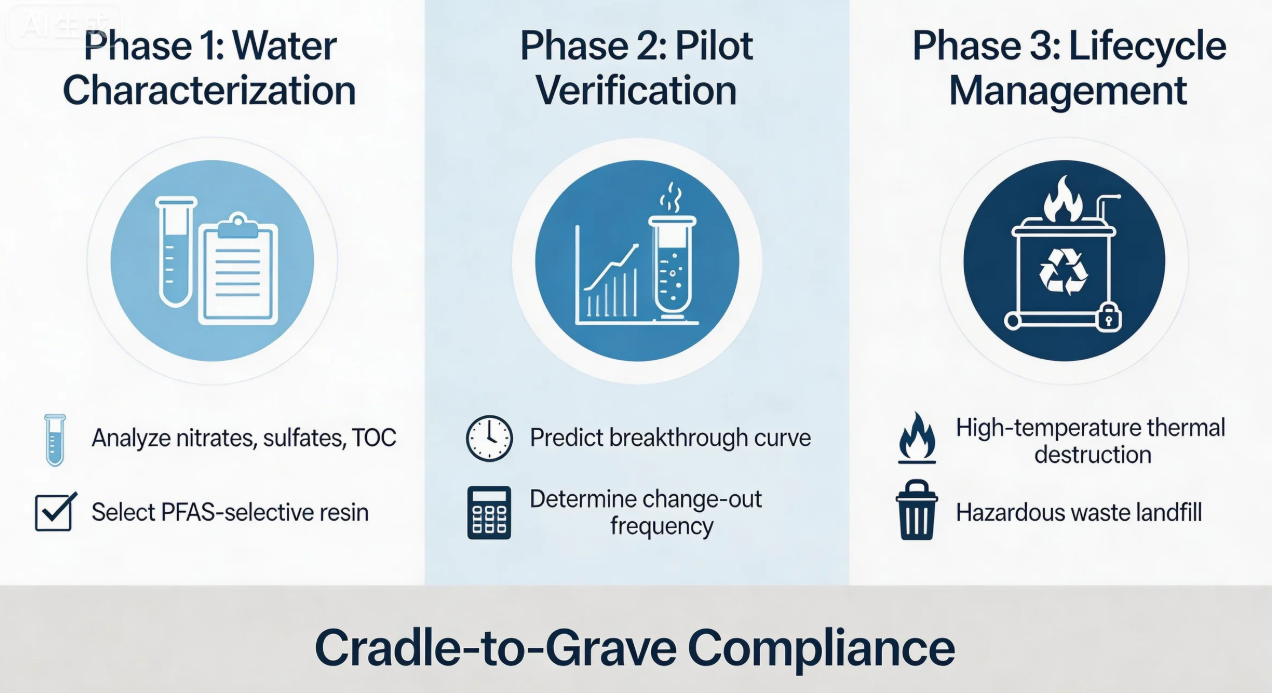
Phase I: Comprehensive Water Characterization
The presence of competing ions—specifically nitrates, sulfates, and high Total Organic Carbon (TOC)—can significantly reduce resin capacity. A detailed chemical analysis is essential to select a resin chemistry that is “PFAS-selective” rather than “non-selective.”
Phase II: Bench-Scale and Pilot Verification
To accurately predict the breakthrough curve and operational expenditure (OPEX), we recommend Rapid Small-Scale Column Testing (RSSCT) or on-site mobile pilot units. These tests provide the empirical data necessary to determine the optimal change-out frequency for the resin media.
Phase III: Lifecycle and Waste Management
In the current regulatory landscape, “capture” is only half the solution. A robust implementation plan must address the final disposition of the spent resin. Industry best practices currently involve high-temperature thermal destruction (incineration) or specialized landfilling in licensed hazardous waste facilities to ensure a “cradle-to-grave” compliance chain.
4. Conclusion: Achieving Operational Excellence
As PFAS standards continue to evolve, the shift toward Ion Exchange represents a move toward greater precision in water treatment. By leveraging the high selectivity and efficiency of modern resins, operators can achieve long-term compliance while optimizing their facility’s operational footprint.
Consult with Our Experts at WATERTECH CHINA
Navigating the complexities of PFAS remediation requires both advanced technology and localized expertise. We invite you to join our technical team at WATERTECH CHINA, held from June 9-11 at the National Exhibition and Convention Center (NECC) in Shanghai.
As a leader in advanced water treatment solutions, we will be showcasing our latest IX resin innovations and pilot-scale capabilities. We look forward to discussing how our tailored PFAS treatment trains can support your facility’s environmental and operational objectives. Please visit our booth to schedule a private technical consultation with our engineering team.
