


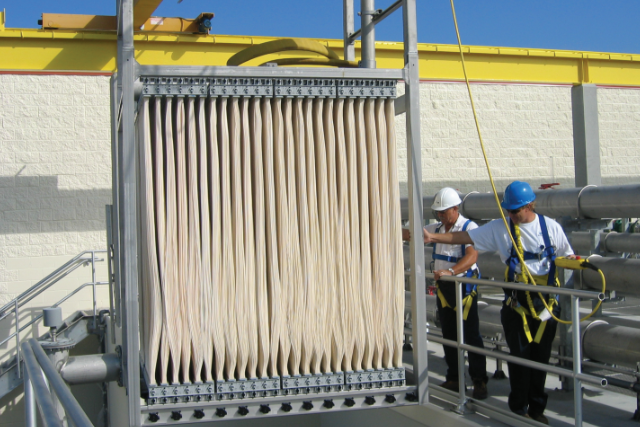
In the current global climate, water scarcity is no longer a localized crisis; it is a systemic risk to industrial stability and urban growth. From the drought-stricken corridors of the Mediterranean to the rapidly industrializing hubs of Southeast Asia, the “take-make-waste” model of water management is being rendered obsolete.
As a leading global platform for water innovation, WATERTECH recognizes that the industry’s response must be rooted in technological intensification. At the forefront of this movement is the Membrane Bioreactor (MBR). Once considered a niche, high-cost alternative to conventional activated sludge, the MBR has undergone a design revolution. By pushing the boundaries of flux, energy efficiency, and digital integration, modern MBR systems are now the primary engine for the global circular water economy.
1. Breaking the “Flux Barrier”: Redefining Physical Performance
For decades, MBR design was constrained by the physical limits of membrane fouling and conservative flux rates. However, the next generation of “Pushing MBR Design” focuses on shattering these ceilings.
By optimizing the synergy between Solids Retention Time (SRT) and Hydraulic Retention Time (HRT), engineers are now achieving unprecedented throughput within smaller footprints. The shift toward “High-Flux” operations—enabled by advanced PVDF (Polyvinylidene Fluoride) membrane chemistries—allows for a significant reduction in the required membrane surface area. For overseas developers, this translates to:
- Reduced Capital Expenditure (CAPEX): Smaller tanks and fewer membrane modules mean lower civil engineering and infrastructure costs.
- Space Optimization: The ability to deploy high-capacity treatment in land-constrained urban environments or existing industrial footprints.
- Fouling Resilience: Enhanced membrane coatings and modified hydraulic pathways that allow for longer intervals between Chemical Enhanced Backwash (CEB) cycles.
2. The Energy-Carbon Nexus: Pathways to Net-Zero Water
One of the most persistent criticisms of legacy MBR technology was its high energy demand, primarily driven by the air scouring required to keep membranes clean. In an era of global “Net-Zero” mandates, this energy intensity is no longer acceptable.
Modern MBR design has addressed this through Smart Aeration and Process Intensification. Technologies such as LEAPmbr and specialized air-scouring algorithms have reduced energy consumption by 30% to 50%. By utilizing AI-driven “Digital Twins,” operators can now modulate aeration in real-time based on actual influent loading and fouling sensors. This move toward “Digital Water” not only slashes Operating Expenditure (OPEX) but also aligns water treatment facilities with international ESG (Environmental, Social, and Governance) standards by significantly lowering the carbon footprint per cubic meter of water treated.
3. MBR as the Gateway to High-Value Resource Recovery
The true strategic value of MBR lies in its role as a “foundation technology.” The permeate produced by an MBR is of exceptional quality—virtually free of suspended solids, pathogens, and microplastics. This makes it the ideal “feed” for a multi-barrier treatment train.
In regions requiring the highest grades of water, the MBR-RO (Reverse Osmosis) configuration has become the gold standard. Because the MBR removes the organic and particulate matter that typically fouls RO membranes, it dramatically extends the life of downstream assets and reduces the energy required for desalination or high-purity filtration.
Case Study: The Vitória Water Reclamation Station (Brazil)
A benchmark for international stakeholders is the Vitória project. By integrating MBR (specifically memDENSE technology) with RO, this facility converts municipal wastewater into high-quality industrial process water for global giants like ArcelorMittal. This “fit-for-purpose” approach reclaims 85% of the basin’s wastewater, effectively decoupling industrial growth from the local freshwater supply—a model that is being replicated across the globe.
4. Addressing Emerging Contaminants: PFAS and Microplastics
As global regulations tighten regarding “forever chemicals” (PFAS) and microplastic pollution, MBR technology offers a critical line of defense. Standard secondary clarifiers often fail to retain microscopic particles. In contrast, the absolute pore-size barrier of an MBR ensures that microplastics are sequestered within the sludge, while providing a stable, clarified effluent that is perfectly suited for Advanced Oxidation Processes (AOP) or specialized resin treatments designed to target dissolved contaminants like PFAS. For overseas municipal leaders, investing in MBR is a future-proofing strategy against evolving environmental legislation.
5. Decentralization and Modular Scaling
The global trend toward Decentralized Water Management is another area where MBR excels. Rather than building massive, centralized infrastructure that requires thousands of kilometers of piping, modular MBR units allow for “Satellite Reuse.” These compact, automated systems can be deployed directly at the point of demand—be it a remote mining site in Australia, a luxury resort in the Maldives, or an industrial park in Vietnam. This flexibility reduces the “water transport” energy cost and allows for scalable growth as demand increases.
Experience the Future of Water at WATERTECH 2025
The innovations described above are no longer theoretical—they are the current reality of a rapidly evolving market. To remain competitive, overseas professionals must have first-hand access to the technologies, the manufacturers, and the visionaries driving these changes.
WATERTECH is the premier global gateway to the latest advancements in water and wastewater treatment. We invite international visitors to join us for a three-day deep dive into the technology that is solving water scarcity on a global scale.
