


How Saudi Arabia’s Water Infrastructure Transformation through Public-private Partnerships Supports Water Security
Saudi Vision 2030 Water Sector Reform Drives New Public-private Water Infrastructure Investment
Saudi Arabia is emerging as a regional leader in water infrastructure innovation, driven by a mix of climate pressures, rapid urbanisation, and strategic economic planning. As part of Vision 2030, the Kingdom has embraced a comprehensive water security strategy that relies on public-private partnerships (PPPs) to modernise treatment plants, expand service delivery, and strengthen governance frameworks in water and wastewater infrastructure.
The Saudi Water Partnership Company (SWPC) has been at the core of this shift, drawing global engineering, technology, and investment partners into megaprojects that would have once been public domain only. By bringing private finance and management expertise into crucial water assets, the Kingdom is positioning its water sector for both efficiency and resilience.
This approach is increasingly seen as essential because traditional publicly funded models struggle to keep pace with urban growth, rising demand, and climate variability — especially in arid regions where freshwater scarcity is structural rather than cyclical.
Large-scale Water and Wastewater Treatment Projects Bring Advanced Technologies and Sustainability Goals
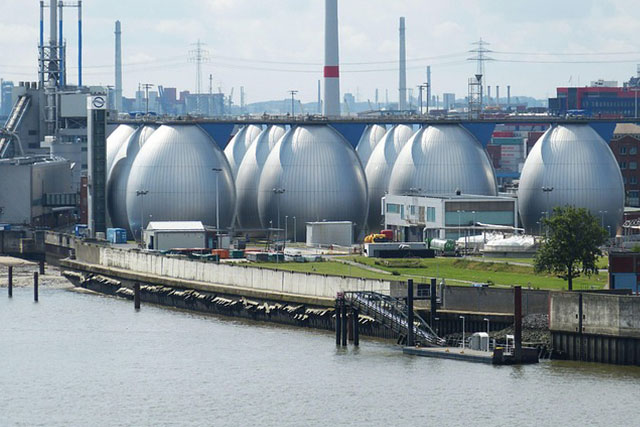
Saudi Arabia’s emphasis on sustainable water management is mirrored in fast-moving upgrades to wastewater and sewage infrastructure. For example, commercial operation has been reached for three major sewer treatment plants in Madinah, Buraydah, and Tabuk, an indicator of how quickly infrastructure projects are moving from planning to operation.
These plants incorporate modern treatment technologies that reduce pollutant loads and support reuse strategies that would have been unaffordable or politically difficult only a decade ago. Moreover, expanding wastewater treatment capacity across secondary cities — not just Riyadh or Jeddah — reflects a model of decentralised water governance linked to broader economic inclusion and public health outcomes.
By focusing on sustainability — including nearly 100% treatment and reuse targets — Saudi Arabia’s national plans aim to conserve limited freshwater sources and build circular-water economies, especially in the agricultural and industrial sectors that are heavy water users.
Why Desalination Expansion in the Philippines Marks a Shift toward Climate-resilient Urban Water Systems
Metro Pacific’s P5.5-B Desalination Plant Tackles Water Scarcity with Advanced Reverse Osmosis
Long drought seasons and unreliable surface water supplies have pushed the Philippines’ water sector toward technological solutions that previously seemed out of reach for many local governments. In Iloilo City, a critical milestone was hit in 2025 with the groundbreaking of a P5.5-billion seawater desalination plant, designed to produce 66,500 cubic metres of potable water each day using reverse osmosis technology.
The facility — developed by Metro Pacific Water in partnership with global water services provider SUEZ and JEMCO — reflects a broader shift in water infrastructure thinking: instead of relying solely on rivers and groundwater, cities increasingly view desalination as a climate-resilient safeguard against drought, population growth, and seasonal variability in freshwater availability.
Projected to serve over 400,000 residents and businesses by the time it becomes operational (expected by 2027), the plant also represents a major leap for the Philippines in water security. Local officials have characterised it as a long-term solution to chronic shortages — a stark contrast to emergency fixes or short-term supply projects of the past.
Expanded Service Investments and Monitoring Systems Underpin Water Network Resilience
The desalination project isn’t the only major development in Iloilo’s water system. Metro Pacific Iloilo Water has committed significant funding — more than PHP 1 billion in upgrades in 2025 alone — to extending distribution networks, improving service coverage, and installing central water monitoring systems.
These investments address not just supply but also distribution inefficiencies and water quality concerns, supporting real-time leak detection, pressure monitoring, and equitable delivery across diverse urban districts. Combined with newer treatment facilities — such as modular plants addressing acute shortages — the strategy mixes infrastructure diversification with digital water management principles.
Crucially, these moves dovetail with broader climate adaptation strategies. Coastal cities, particularly in Southeast Asia, face rising temperatures, unpredictable rainfall, and competing demands from agriculture, industry, and rapidly urbanising populations. Local water utilities are now expected to plan for longer drought periods and higher peak demands — a reality that traditional systems weren’t designed to handle.
What Technologies and Policy Drivers are Accelerating Sustainable Water Treatment and Reuse
Digital Water Management and Non-Revenue Water Reduction Integrate into Next-gen Infrastructure Planning
Across regions like the Middle East and Southeast Asia, water utilities are no longer just providers of treated water — they are data-driven service networks. Advanced tools like AI, IoT, and digital twins are increasingly critical for leak detection, network optimisation, and predictive maintenance, especially as utilities contend with ageing pipelines and unpredictable demand patterns.
Although the Iloilo context is newer to digital transformation than some mature European or North American systems, the push toward integrated monitoring platforms indicates utilities are prioritising operational efficiency and real-time system visibility — key ingredients for tackling leakage and non-revenue water that can otherwise waste up to 30 % of supply.
Such technologies are increasingly expected to be part of large projects — including desalination facilities and treatment plants — because they support long-term operational savings, regulatory compliance, and climate resilience.
Policy Alignment with Sustainable and Circular Water Economies Shapes Investment Flows
Water infrastructure is becoming inextricably linked to broader policy frameworks that favour sustainability. In Saudi Arabia, water security initiatives are integrated into Vision 2030, influencing national budgets, regulatory incentives, and PPP frameworks that align private capital with public climate and water goals.
Likewise, in the Philippines, municipal and national policy actors are tying water system upgrades to urban development, economic growth, and public health objectives — ensuring that investments in desalination and monitoring directly contribute to equitable access and climate readiness.
This alignment is visible in the evolution of large-scale water forums, investment summits, and cross-sector partnerships that bring technology providers, utilities, and policymakers together to solve challenges such as scarcity, quality standards, and future-proofing water systems.
How Water Market Forecasts and Investment Trends Signal Long-term Industry Growth
Global Desalination and Treatment Markets Poised for Strong Expansion through 2032
Market intelligence points to sustained growth in water infrastructure segments. For instance, the desalination industry — driven by rapid urban growth and climate-induced scarcity — is expected to nearly double in value over the coming decade, highlighting the sector’s expanding role in global water security strategies.
Similarly, water and wastewater treatment equipment markets are forecast to grow strongly, reflecting ongoing investments in infrastructure upgrades, regulatory compliance, and service quality improvements. These markets are driven by both municipal needs and industrial demand for cleaner, more reliable water sources.
Such forecasts align with the new projects in Saudi Arabia and the Philippines, where governments and private investors are committed to durable infrastructure that can support shortages, population growth, and sustainability goals over decades.
Integrated Planning and PPPs De-risk Investment and Encourage Innovation Adoption
The Saudi model — consciously designed to attract global developers through incentives and regulatory clarity — reduces perceived risk for capital intensive water infrastructure projects. By establishing clear contractual frameworks and predictable revenue mechanisms, PPPs unlock funding for mega projects that might otherwise stall due to fiscal uncertainty.
This financing model is increasingly attractive in regions — including Southeast Asia — where utilities may lack the budget flexibility to fund major upgrades alone. PPPs allow for shared risk and access to international expertise in desalination, treatment, and advanced monitoring systems.
What Challenges and Risks Stand in the Way of Water Infrastructure Durability and Access
Cost, Energy Use, and Skill Gaps Remain Barriers to Scaling Water Technologies Effectively
Despite strong momentum, challenges persist. Desalination and advanced treatment systems are energy-intensive, and while technological gains have improved efficiency, high operating expenditures remain a concern for utilities and governments alike.
Similarly, digital tools like AI and IoT platforms require skilled personnel to deploy, maintain, and interpret system data — a capacity that is unevenly distributed across regions and utilities.
Ensuring that infrastructure upgrades do not exacerbate inequalities — for example, between urban and rural supply systems — will require deliberate policy design and targeted financing mechanisms.
Climate Extremes and Hydrological Uncertainty Put Infrastructure to the Test
Projects like the Iloilo desalination plant and Saudi treatment expansions are designed partly in response to climate volatility — but climate change itself remains an unpredictable force. Extreme heat, sea level rise, flash floods, and shifting rainfall patterns can stress water systems in ways that exceed design assumptions.
Long-term resilience planning must therefore integrate climate projections into infrastructure design, enforce adaptive management practices, and foster community awareness of water scarcity risks.
Water is at the heart of sustainable development, economic growth, and climate adaptation — and the global industry is responding with innovation, investment, and structural reform.
Saudi Arabia’s PPP-driven transformation and the Philippines’ large-scale desalination buildout exemplify how water security challenges can be met with bold infrastructure planning, strategic partnerships, and a willingness to embrace new technologies.
Yet the path ahead is as complex as it is critical. Success depends on aligning policy, technology, finance, and community needs — not just building plants or pipelines, but ensuring access, resilience, and equity in a world where water scarcity shapes every continent’s future.
