






Introduction
The global industrial landscape is undergoing a tectonic shift toward decarbonization, and at the heart of this movement is The State Council of the People’s Republic of China. As the world’s largest producer of renewable energy, China has refined its Green Electricity Certificate (GEC) system to provide a transparent, market-based mechanism for tracking clean energy consumption. For the water treatment sector—an industry traditionally characterized by high energy intensity—the surge in GEC availability represents a transformative opportunity.
This article explores the synergy between renewable energy credits and water utility excellence. From powering massive seawater desalination plants to achieving wastewater compliance with net-zero goals, green certificates are no longer just an ESG “nice-to-have”; they are a strategic asset. Discover how the innovations showcased at WATERTECH CHINA are aligning with these national mandates to redefine the ROI of sustainable water infrastructure.
The Strategic Framework of China’s Green Electricity Certificates (GEC)
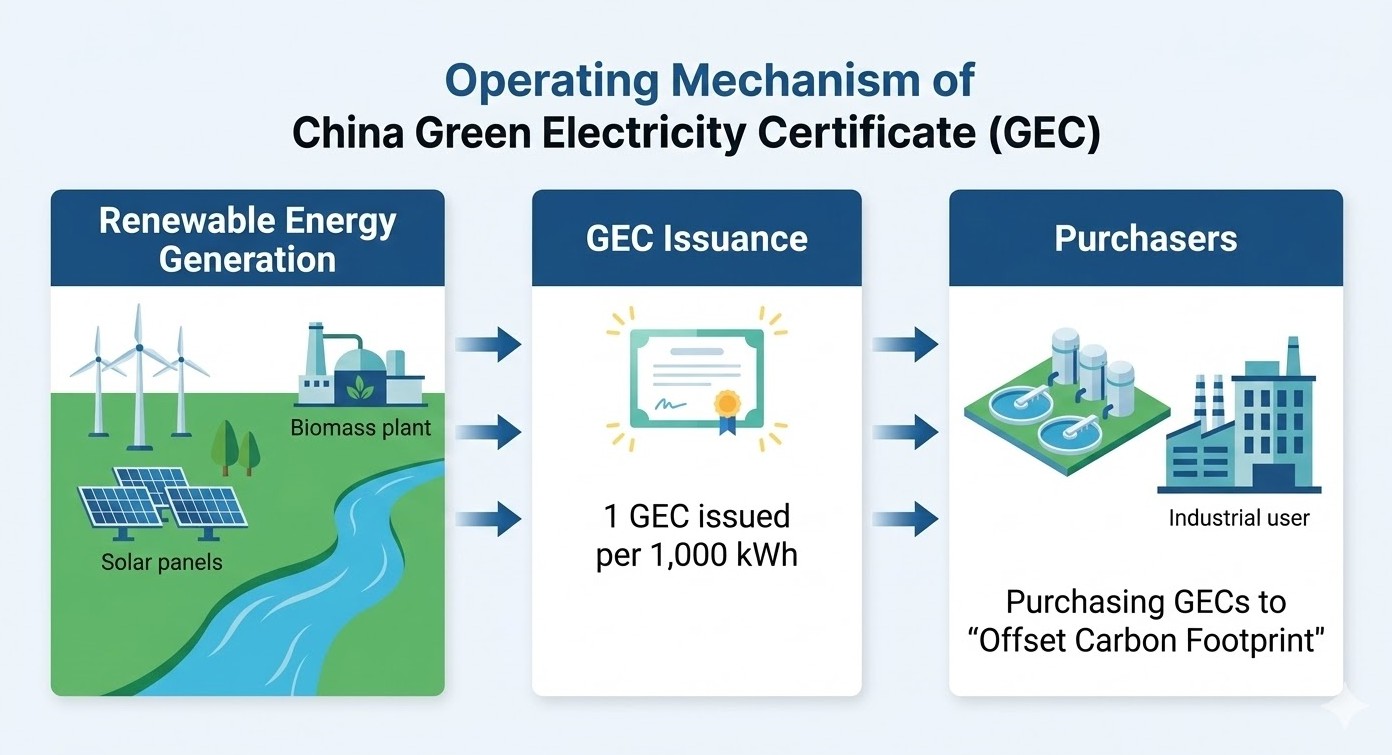
China’s GEC system serves as the “birth certificate” for renewable energy. Each certificate represents 1,000 kWh of electricity generated from renewable sources like wind, solar, and biomass. In 2026, the government expanded the GEC scope to cover almost all renewable energy types, significantly boosting China’s Green Certificate Growth. For water utilities, this provides a verifiable path to claim renewable energy usage even if they are not directly connected to a solar farm. This aligns with the Digital China Construction Plan and the 14th Five-Year Plan for the Digital Economy.
Decarbonizing Water Treatment: Why GECs Matter
Water treatment is energy-hungry, accounting for roughly 4% of global electricity consumption. By adopting GECs, water plants can offset their carbon footprint. This is particularly relevant for exhibitors at WATERTECH CHINA who specialize in high-energy processes like Reverse Osmosis (RO) and Zero Liquid Discharge (ZLD). Using green certificates allows these facilities to market their services as “Low-Carbon Water,” a growing requirement for multinational clients under ISO 14064-1:2018 – Greenhouse gases.
Powering Desalination: A Case for Solar-Integrated Water
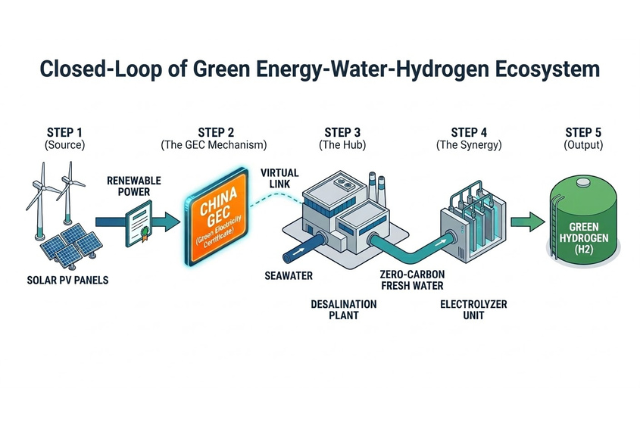
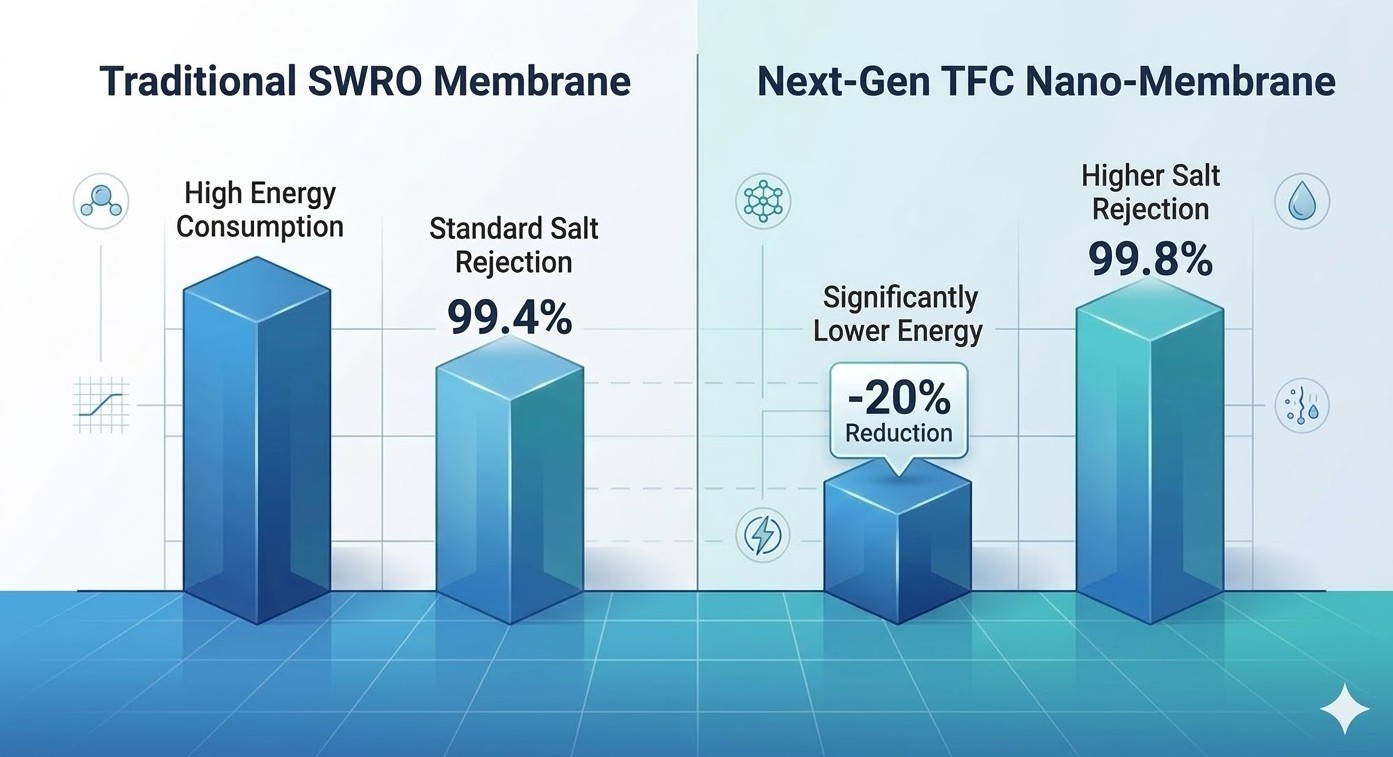
As freshwater scarcity hits a tipping point, seawater desalination is transitioning to renewable integration. The growth of GECs allows coastal desalination hubs in Shandong and Zhejiang to “green” their operations virtually. When a plant buys GECs, it supports the financial viability of solar farms, creating a circular economy that will be a major highlight at the National Exhibition and Convention Center (NECC).
Wastewater Compliance and the Net-Zero Mandate
The 14th Five-Year Plan emphasizes “Green Development.” Wastewater compliance now involves not just water quality, but also the carbon intensity of the treatment process. China’s Green Certificate Growth enables municipal plants to meet strict provincial carbon quotas while upgrading their membrane filtration systems. This data-centric approach is supported by the Digital Water Programme – International Water Association.
Digital Twins and GEC Tracking
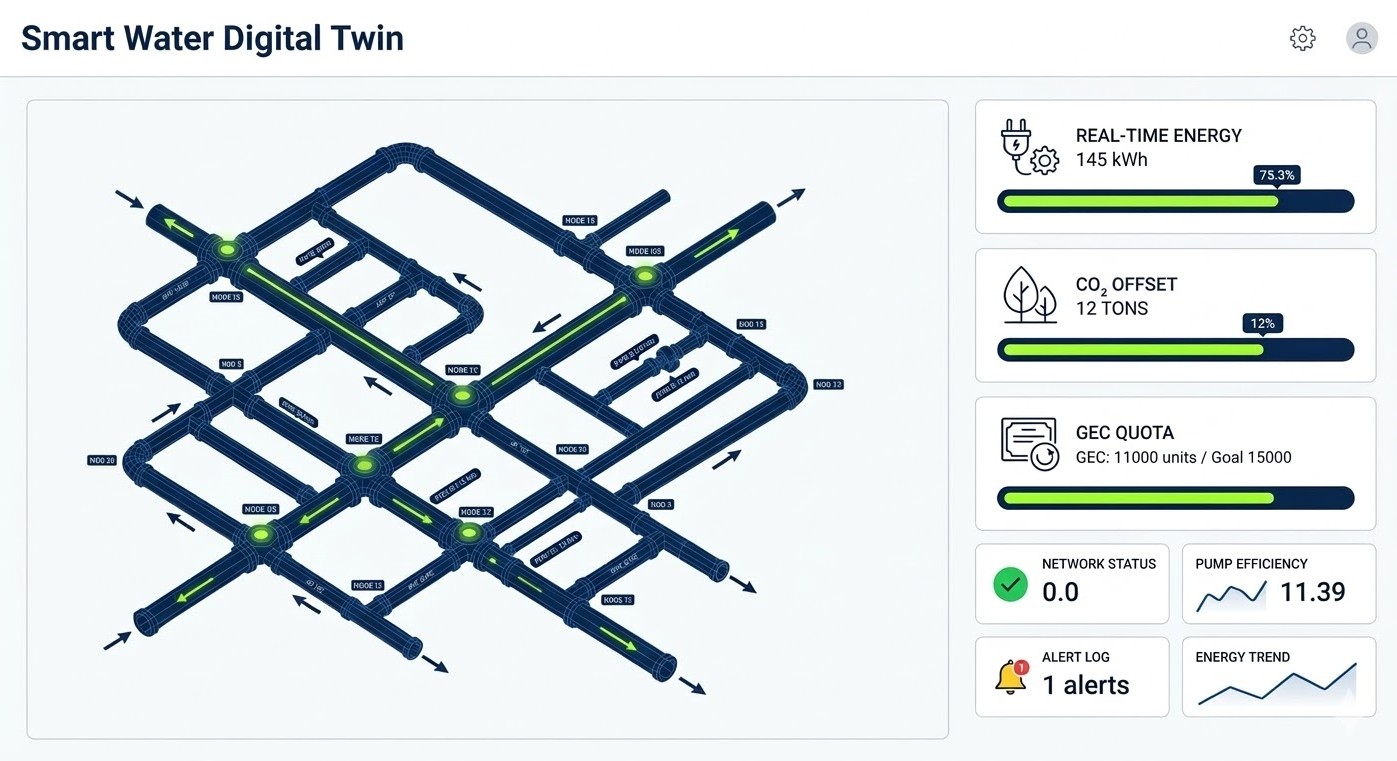
The integration of Digital Twin technology allows utilities to monitor energy consumption in real-time and automatically retire GECs based on usage. This “Smart Green” approach ensures that every drop of water treated is backed by a verified renewable energy credit. Leading exhibitors at WATERTECH CHINA are now showcasing virtual replicas of entire city pipe networks to optimize this energy-water nexus.
ROI for Global Buyers: Sourcing Green Technology
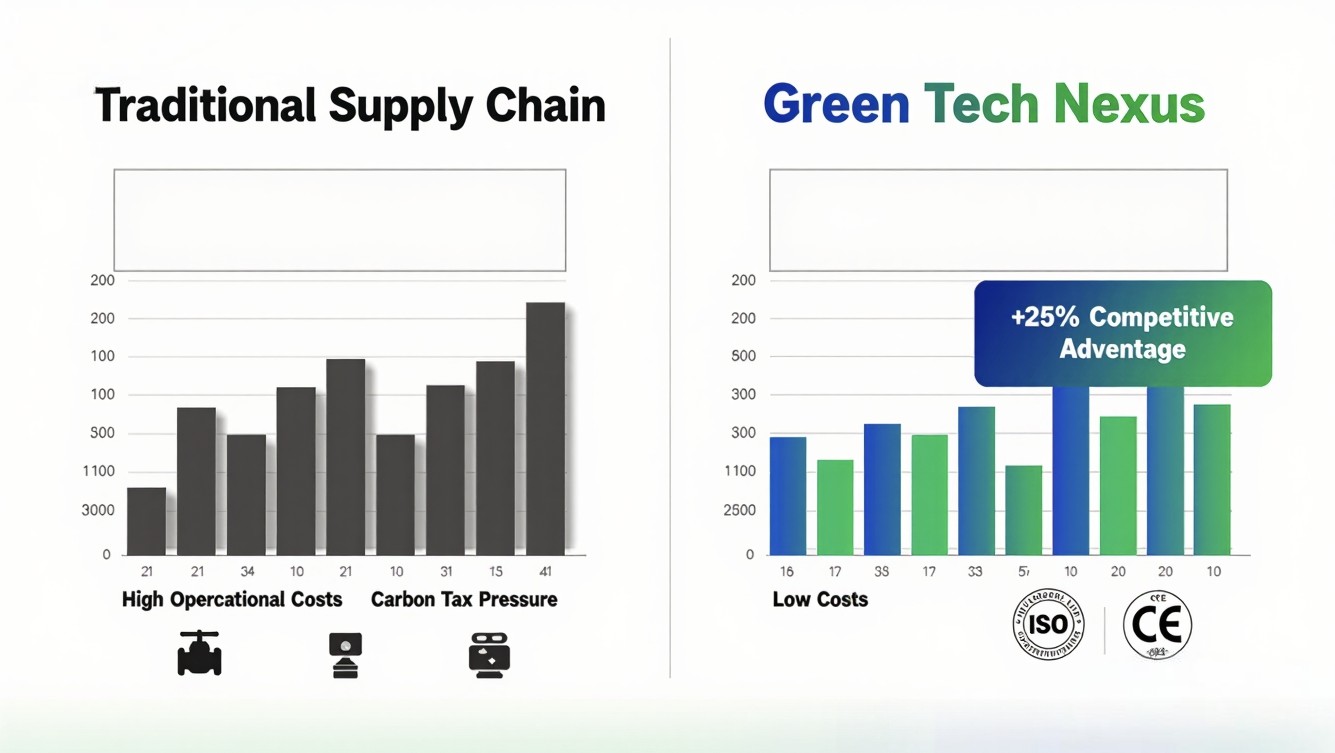
International procurement managers are looking for “Green Supply Chains.” Sourcing intelligent valves or high-end sensors from WATERTECH CHINA means engaging with manufacturers who are already using GECs to lower their product’s embodied carbon. This provides a 15-25% competitive advantage in ESG-sensitive markets. Sourcing from the Global OEM/ODM Nexus in Shanghai allows firms to cut operational expenses while adopting technologies that meet ISO/TS 128-71:2010 – Technical product documentation (TPD).
The Role of NB-IoT in Energy Monitoring
To maximize GEC value, precise data is needed. NB-IoT sensors provide the granular energy data required to calculate how many certificates are needed for specific industrial processes, reducing waste and optimizing SWAN – SWAN Forum management.
Quick Takeaways: China’s Green Water Roadmap
- Rapid Expansion: GEC coverage now includes almost all renewable sources in China, fueling China’s Green Certificate Growth.
- Cost Efficiency: GECs offer a cost-effective way for water plants to achieve carbon neutrality without heavy infrastructure investment.
- Compliance: Using certificates helps meet both domestic mandates and international Water Management.
- Sourcing Hub: WATERTECH CHINA is the premier platform to access China’s low-carbon.
- National Targets: China aims to reduce urban leakage rates below 9% while scaling green energy integration.
Lead the Digital Wave at WATERTECH CHINA
The momentum behind China’s Green Certificate Growth is undeniable. For the water industry, this represents a unique moment to align operational efficiency with environmental stewardship. Join 120,000+ industry leaders at the National Exhibition and Convention Center (NECC) to secure your place in the digital and green future.

