




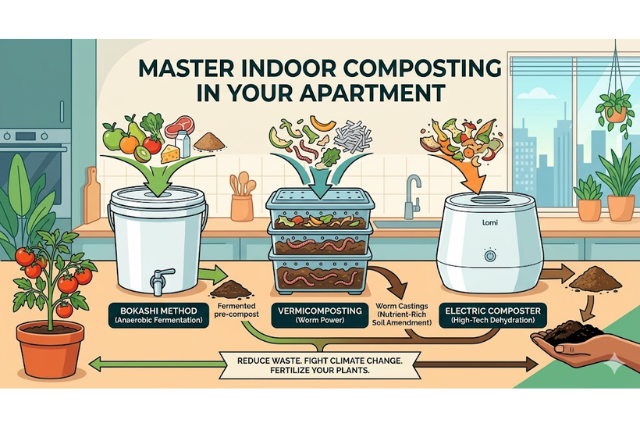
Have you ever looked at your trash can, overflowing with coffee grounds, banana peels, and wilted spinach, and thought there had to be a better way? If you live in a high-rise or a small rental without a backyard, you might assume you’re stuck throwing away your food scraps. Think again. Indoor composting is rapidly becoming a staple of sustainable living in small spaces, allowing urban apartment dwellers to transform their daily food waste into “black gold” right on their countertops or tucked under the sink.
In this comprehensive guide, we will break down everything you need to know about starting an indoor composting system tailored for tight quarters. Whether you are curious about high-tech countertop electric composters, the magic of red wiggler worms, or the odor-free fermentation of Bokashi, we have you covered. You will learn the exact science of balancing your greens and browns, troubleshooting pesky fruit flies, and leveraging the latest 2026 waste reduction trends to your advantage. By the time you finish reading, you’ll be ready to turn yesterday’s salad into tomorrow’s nutrient-rich soil amendment without any mess or foul smells. Let’s dig in!
Why Start Indoor Composting Today?
If you are an apartment renter wondering why you should bother keeping food scraps inside your living space, the answer goes far beyond just feeling good about the environment. Choosing to reduce food waste at home has direct, measurable impacts on global climate health, and as of 2026, it is increasingly becoming a matter of civic compliance as well.
According to the EPA, food accounts for a staggering 24% of the waste sent to municipal landfills in the United States, making it the single largest material category we throw away [1]. Every time you toss out an apple core or half-eaten leftovers, it ends up trapped under mountains of garbage where it cannot decompose properly. This is where apartment composting methods truly shine. By keeping these organics out of the trash, you are taking a tangible step toward sustainable living in small spaces while producing a high-quality organic fertilizer for your own use.
The Hidden Climate Impact of Food Waste
When organic material decomposes in a landfill without oxygen (an anaerobic environment), it generates methane. Methane is a greenhouse gas roughly 80 times more potent than carbon dioxide over a 20-year period. A unique insight not often discussed in basic gardening blogs is that municipal policies are aggressively shifting to combat this. As of 2026, 12 U.S. states have enacted strict organic waste recycling laws or diversion mandates. New York City, for example, made residential food scrap separation mandatory citywide, enforceable by fines. By starting your indoor bin now, you are future-proofing your household routine against upcoming municipal regulations.
New Methane Findings in 2026
The urgency is greater than we previously thought. A landmark 2024 Harvard study utilizing satellite data revealed that actual landfill methane emissions are 51% higher than official EPA estimates originally suggested. The incredible news? Composting food scraps aerobically (with oxygen) produces 38 to 84% fewer greenhouse gas emissions than landfilling. Your small under-sink bin is actively fighting a massive, under-reported climate crisis.
Types of Indoor Composting Systems
Choosing the right setup is the most critical decision for urban apartment dwellers. Gone are the days when composting required a massive outdoor pile that attracted raccoons. Today, the household composters market is booming—expected to reach over $164.8 million in North America alone by the end of 2026—resulting in highly efficient, apartment-friendly technologies. Here is a breakdown of the three best systems for indoor use.
Bokashi: The Pickling Powerhouse
Bokashi is a Japanese method that translates to “fermented organic matter.” Unlike traditional methods that require oxygen, Bokashi is an anaerobic process. You place your food scraps into a specialized, airtight bucket and sprinkle Bokashi bran fermentation powder over each layer. The bran is inoculated with beneficial microbes that essentially pickle your waste.
- Pros: It is completely airtight (meaning zero odor in your apartment) and handles things traditional bins cannot, like meat, dairy, and oily foods.
- Cons: It requires purchasing ongoing supplies of bran, and the end product is a fermented “pre-compost” that needs to be mixed with soil for a few weeks to fully break down.
Vermicomposting: Red Wigglers to the Rescue
If you don’t mind sharing your apartment with some silent roommates, vermicomposting is incredibly rewarding. This DIY worm bin setup uses a specific species called Eisenia fetida (red wiggler worms). These voracious eaters consume their body weight in food scraps every few days, leaving behind worm castings—one of the most nutrient-dense fertilizers on earth.
- Pros: Excellent for small spaces; the worms do all the heavy lifting, and a healthy bin smells earthy, like a forest floor after the rain.
- Cons: You must protect them from extreme temperatures, ensure they don’t dry out, and avoid feeding them dairy, meat, or citrus.
Electric Composters: Tech-Savvy Convenience
For those who want immediate results with zero “ick” factor, countertop electric composters (like the Lomi or Vitamix FoodCycler) have revolutionized the indoor market. Holding a massive 62.7% of the North American household composter market share in 2025, these appliances use a combination of heat, aeration, and grinding to dehydrate and pulverize food scraps in a matter of hours.
- Pros: Fits right on your kitchen counter, works overnight, handles almost all food waste, and features carbon filters for ultimate compost bin odor control.
- Cons: They require electricity to run and have a higher upfront cost compared to manual bins.
Essential Greens and Browns for Indoor Bins
If you are using a traditional bin or a worm setup, mastering the “greens and browns ratio” is the secret to a successful, odor-free experience. Composting is basically a recipe; if you add too much of one ingredient, the batch spoils. You want to aim for roughly one part greens to three parts browns.
What You Should Compost
Greens are your nitrogen-rich materials. They provide the protein and moisture that microbes and worms need to thrive.
- Fruit and vegetable peelings (apple cores, carrot tops)
- Coffee grounds and paper tea bags (remove the staple!)
- Wilted houseplants or dead leaves
Browns are your carbon-rich materials. They provide energy, absorb excess moisture, and maintain airflow inside the bin.
- Shredded newspaper (avoid glossy inserts)
- Torn-up cardboard (toilet paper rolls are great)
- Dry leaves or brown paper bags
What You Must Avoid
Unless you are using an electric dehydrator or a Bokashi system, there are strict rules on what stays out of the bin. Never add meat, bones, fish, dairy products, or greasy foods. These materials rot rather than compost aerobically, releasing terrible odors and attracting pests. Additionally, pet feces (like dog waste or kitty litter) should never be composted indoors due to the high risk of dangerous pathogens and parasites [3].
Step-by-Step Guide to Your First Batch
Ready to dive in? Setting up your first indoor system does not have to be intimidating. By following these foundational steps, you can establish a healthy decomposition environment right in your kitchen or utility closet.
Choosing the Right Container
First, evaluate your space. If you are going the DIY worm bin route, you will need a dark, opaque plastic storage tote. Drill about 10 quarter-inch holes in the sides and lid to aerate the compost pile indoors, as the decomposer organisms require a steady supply of oxygen to survive. Place a tray underneath to catch any liquid runoff (often called “worm tea,” which is fantastic for plants). If you prefer aesthetics, you can purchase stylish, pre-made bamboo or stainless-steel bins that feature built-in charcoal filters in the lid.
Balancing Moisture and Oxygen
The biggest rookie mistake apartment dwellers make is letting the bin get too wet. Your compost should always feel like a wrung-out sponge—damp to the touch but not dripping water.
1. Start with a Bedding Layer: Fill the bottom third of your bin with moistened browns (like shredded newspaper).
2. Add Your Greens: Chop your food scraps into one- or two-inch pieces. Smaller pieces decompose much faster.
3. Bury the Waste: Every time you add a layer of greens, immediately cover it completely with a thick layer of dry browns. This buries the scent and prevents flies from laying eggs.
4. Aerate: Once a week, use a small trowel to gently turn the pile. This introduces oxygen, keeping the helpful aerobic bacteria happy and preventing the smelly anaerobic bacteria from taking over.
Troubleshooting Common Indoor Composting Issues
Even the most diligent urban gardeners run into hiccups. Because your bin is living inside your home, reacting quickly to imbalances is key. Let’s tackle the two most notorious problems: bugs and smells.
Dealing with Pests and Fruit Flies
Nothing ruins the vibe of an apartment kitchen faster than a swarm of fruit flies. Fruit flies are attracted to exposed, decomposing sugars.
- The Fix: Never leave food scraps resting on the top of your pile. Always bury them deep beneath a two-inch layer of dry bedding. If you already have an infestation, build a quick fruit fly trap for compost: cut a plastic water bottle in half, put apple cider vinegar and a drop of dish soap in the bottom, and invert the top half to create a funnel [1]. The flies check in, but they don’t check out.
- Pro-tip: Keep a small container in your freezer for daily scraps. Freezing the scraps first breaks down their cell walls (speeding up decomposition later) and instantly kills any fruit fly eggs hidden on banana peels before they ever enter your bin.
Fixing Unpleasant Odors Quickly
A healthy indoor bin should smell like fresh earth. If your bin smells like rotten eggs or ammonia, it has gone anaerobic. This means it is too wet, lacks oxygen, or has too much nitrogen.
- The Fix: Stop adding green food scraps immediately. Add several handfuls of dry shredded cardboard or paper to soak up the excess moisture, and give the entire bin a thorough stir to inject oxygen into the center of the pile. Within 48 hours, the ecosystem will rebalance and the smell will vanish.
How to Use Your Finished Compost
After a few months of diligent feeding and turning, your scraps will transform into dark, crumbly, sweet-smelling humus. But what do you do with it if you don’t have an outdoor garden?
Boosting Indoor Houseplants
Your finished compost is a nutrient-rich soil amendment. However, it is too powerful to plant seeds directly into. Instead, use it as a fertilizer for your indoor jungle. You can “top dress” your potted plants by sprinkling a half-inch layer of compost over the surface of the soil. Every time you water the plant, nutrients will slowly leach down to the roots. You can also mix it into standard potting soil (aiming for a 10% compost to 90% potting soil ratio) when repotting your monsteras or pothos.
The Microbiome Benefits of Soil
There is a surprising health benefit to handling your homemade dirt. A fascinating 2024 University of Florida study demonstrated that individuals who spent time indoor gardening with microbially diverse soil (like homemade compost) showed diversified skin microbiota and a measurable increase in anti-inflammatory cytokine levels in their bodies. Handling your compost literally boosts your immune system and lowers cortisol, proving that closing the food waste loop is as good for your personal wellness as it is for the planet.
Quick Takeaways
- Environmental Impact: Indoor composting cuts greenhouse gas emissions by up to 84% compared to sending food to landfills.
- System Varieties: Choose between Bokashi (for meat/dairy), vermicomposting (using worms), or convenient electric countertop units.
- The Golden Ratio: Always balance your bin with one part nitrogen-rich “greens” (food scraps) to three parts carbon-rich “browns” (paper/cardboard).
- Prevent Pests: Freezing your scraps before composting and always burying them under dry browns will eliminate fruit fly issues.
- Odor Control: If your bin smells bad, it’s too wet. Add dry shredded paper and stir well to reintroduce oxygen.
Conclusion
Starting your indoor composting journey might seem like a daunting science experiment at first, but it quickly becomes second nature. By understanding the simple mechanics of balancing moisture, managing your greens and browns, and choosing a system that fits your apartment’s footprint, you can eliminate odors and completely sidestep pest issues.
More importantly, as we navigate 2026 and beyond, diverting organic waste from landfills is no longer just a hobby for eco-enthusiasts—it is a critical climate action and, increasingly, a legal requirement in many states. You hold the power to reduce harmful methane emissions right from your kitchen counter while simultaneously creating a rich, vibrant soil amendment that will make your indoor houseplants thrive.
Don’t wait for your municipality to force your hand. Pick up a Bokashi bucket, order a batch of red wigglers, or invest in an electric dehydrator today. Your trash can will be lighter, your apartment will be greener, and you will be actively contributing to a more sustainable future.
Frequently Asked Questions (FAQs)
1. Will an indoor compost bin attract cockroaches or rats to my apartment?
No, not if managed correctly. Pests are attracted to the smell of rotting food. By strictly avoiding meats, dairy, and oils in traditional bins, and by always burying your fresh food scraps under a thick layer of dry “browns” (like paper), your bin will not emit the odors that attract pests.
2. How long does it take for food scraps to turn into compost indoors?
The timeline varies wildly by method. An electric countertop composter can break down waste in 4 to 8 hours. A Bokashi system takes about 4 weeks (2 weeks to ferment, 2 weeks to mix with soil). A traditional indoor worm bin typically yields usable nutrient-rich soil amendment in 2 to 4 months.
3. Can I compost citrus peels and onions in a worm bin?
It is best to use them very sparingly or avoid them altogether. Red wiggler worms are highly sensitive to the acidic oils in citrus skins and the pungent compounds in onions and garlic. Too much can kill the worms or cause them to try and escape the bin.
4. What happens if I produce more food waste than my indoor system can handle?
If you generate a lot of scraps, consider scaling up to a multi-tiered worm bin or utilizing a compost bucket holding area. You can store excess scraps in the freezer or use a Bokashi bin to safely hold fermented waste until you can donate it to a local community garden or utilize city organics drop-off sites.
5. Are electric composters actually creating real compost?
Technically, no. Countertop electric composters speed-dry and grind food waste into a sterile, dehydrated “pre-compost” dirt. While it is excellent for reducing food waste at home and cutting volume by 90%, it lacks the living microbes of traditional compost. You still need to mix it into moist soil to let natural bacteria finish the decomposition process.
We Want to Hear From You!
Did you find this guide helpful in planning your urban apartment setup? What is the biggest challenge holding you back from starting your indoor compost bin today? Drop a comment below to share your thoughts, and if you found these tips valuable, please share this article with your fellow apartment-dwelling friends on social media so we can all reduce our footprint together!
Industry Spotlight: Driving Global Sustainability
While home composting is a vital personal step toward a greener life, large-scale technological innovation is equally essential for our planet’s survival. To see how these environmental solutions scale from the kitchen to the global stage, we invite you to look toward the pulse of industrial innovation.
We invite you to join thousands of international delegates in Shanghai to witness the technologies that will define the next decade of water resilience.
- Exhibition Name: WATERTECH 2025
- Date: June 9-11, 2025
- Venue: National Exhibition and Convention Center (NECC), Shanghai, China
- Why Visit: Connect with 2,500+ exhibitors, attend high-level technical forums, and discover the localized innovations that are solving global water inequality.
